A bicycle accident can happen in only a few seconds, but the injuries resulting from that crash may affect a cyclist for months, years, or even the rest of their life. Unlike occupants of passenger vehicles, bicyclists have very little physical protection when a collision occurs.
A cyclist can be struck by a car, SUV, pickup truck, commercial vehicle, motorcycle, or another bicycle. A rider may also lose control because of a pothole, defective roadway, construction area, debris, or unsafe road conditions. After losing balance, the cyclist may be thrown onto the pavement or into another vehicle or roadside object.
Some bicycle accident injuries are relatively minor. Others can be extremely serious.
Among the most concerning injuries are those involving the head, brain, neck, spinal cord, and back. These injuries may affect a person’s ability to walk, work, communicate, remember information, maintain balance, or perform everyday activities.
A serious bicycle accident can also create financial problems. Emergency treatment, hospitalization, surgery, diagnostic testing, rehabilitation, medications, physical therapy, and follow-up appointments can become expensive. If the injured cyclist cannot work, the loss of income may create additional financial pressure for the household.
For these reasons, understanding severe bicycle crash injuries is important for cyclists and their families.
Why Bicycle Accidents Can Cause Severe Injuries
Bicycles do not provide the same protection as enclosed motor vehicles.
A passenger in a car is surrounded by a vehicle structure designed to provide some protection during a collision. Seat belts, airbags, crumple zones, head restraints, and other safety features may reduce the forces experienced by occupants.
Cyclists generally do not have those protections.
When a bicycle collides with a vehicle, the rider may be thrown from the bicycle. In some crashes, the cyclist’s body strikes the hood or windshield before landing on the road. In other accidents, the rider may be knocked directly to the pavement.
The impact may cause the head to strike the ground even when the cyclist does not remember hitting their head.
The body can also experience sudden twisting, compression, or stretching forces. These forces can affect the neck, back, joints, muscles, ligaments, nerves, and spinal cord.
The size and weight of the vehicle can also influence the consequences of a collision. A bicycle crash involving a large SUV or pickup truck may present different injury risks than a lower-speed collision involving another bicycle.

Head Injuries Are a Major Concern After Bicycle Crashes
Head injuries are among the most serious potential consequences of a bicycle accident.
A cyclist can sustain a head injury after being struck by a vehicle, falling over the handlebars, hitting a pothole, losing control on a wet roadway, or being thrown onto the pavement.
A head injury does not always involve an obvious external wound.
A person can have a significant brain injury even when there is no visible bleeding or major swelling. This is one reason cyclists should take symptoms seriously following a substantial crash.
Head injuries can include concussions, skull fractures, bleeding around or inside the brain, and other forms of traumatic brain injury.
The symptoms and severity can vary from person to person.
Understanding Concussions After a Bicycle Accident
A concussion is a type of traumatic brain injury caused by a blow, bump, or jolt to the head or body that causes the brain to move rapidly inside the skull.
The Centers for Disease Control and Prevention explains that concussion symptoms can involve physical, cognitive, emotional, and sleep-related changes.
A cyclist with a concussion may experience headaches, dizziness, balance problems, nausea, sensitivity to light or noise, blurry vision, difficulty concentrating, memory problems, fatigue, irritability, or changes in sleeping patterns.
Some people may feel confused or describe themselves as feeling “foggy.”
The cyclist may initially believe the symptoms will disappear quickly. In some cases, symptoms can improve with appropriate care, while others may continue for a longer period.
This makes medical evaluation important after a significant crash, particularly when the cyclist has struck their head or is experiencing unusual symptoms.
For more information, readers can visit the Centers for Disease Control and Prevention’s traumatic brain injury resources for information about concussion symptoms and recovery.
Traumatic Brain Injuries Can Be More Serious Than They First Appear
A traumatic brain injury, commonly called a TBI, can range from mild to severe.
A concussion is generally considered a mild TBI, although “mild” does not necessarily mean that symptoms are insignificant.
More severe traumatic brain injuries can result in substantial neurological impairment.
A person with a serious brain injury may experience difficulties involving memory, attention, speech, coordination, movement, behavior, emotional regulation, or other functions.
The consequences may be temporary, long-lasting, or permanent depending on the nature and severity of the injury.
A serious TBI may require emergency hospitalization, neurological evaluation, imaging studies, rehabilitation, physical therapy, occupational therapy, speech therapy, or continuing medical care.
In the most serious cases, an injured person may require assistance with everyday activities.
Symptoms of a Traumatic Brain Injury
Symptoms following a bicycle crash can vary significantly.
A cyclist may experience headaches, dizziness, nausea, confusion, fatigue, difficulty concentrating, memory problems, vision changes, sensitivity to light or sound, or problems maintaining balance.
Changes in mood or behavior can also occur.
Someone who was previously able to concentrate on work for hours may suddenly have difficulty completing simple tasks. Another person may become unusually irritable or experience emotional changes.
Sleep can also be affected.
These symptoms can interfere with employment, school, driving, relationships, exercise, and household responsibilities.
Because symptoms can vary, anyone who believes they may have suffered a concussion or other brain injury should seek appropriate medical evaluation.
Emergency Warning Signs After a Head Injury
Some symptoms require immediate emergency medical attention.
A person who becomes unconscious, has worsening confusion, experiences repeated vomiting, develops seizures, has severe or worsening headaches, becomes unusually difficult to wake, or develops significant weakness or other neurological symptoms may require emergency care.
After a serious bicycle crash, family members and witnesses should not assume that a cyclist is fine simply because the person is awake and talking.
A cyclist may be able to communicate immediately after a crash and still have a serious injury.
When emergency symptoms are present, calling 911 should take priority over collecting evidence, speaking with an insurance company, or discussing fault.
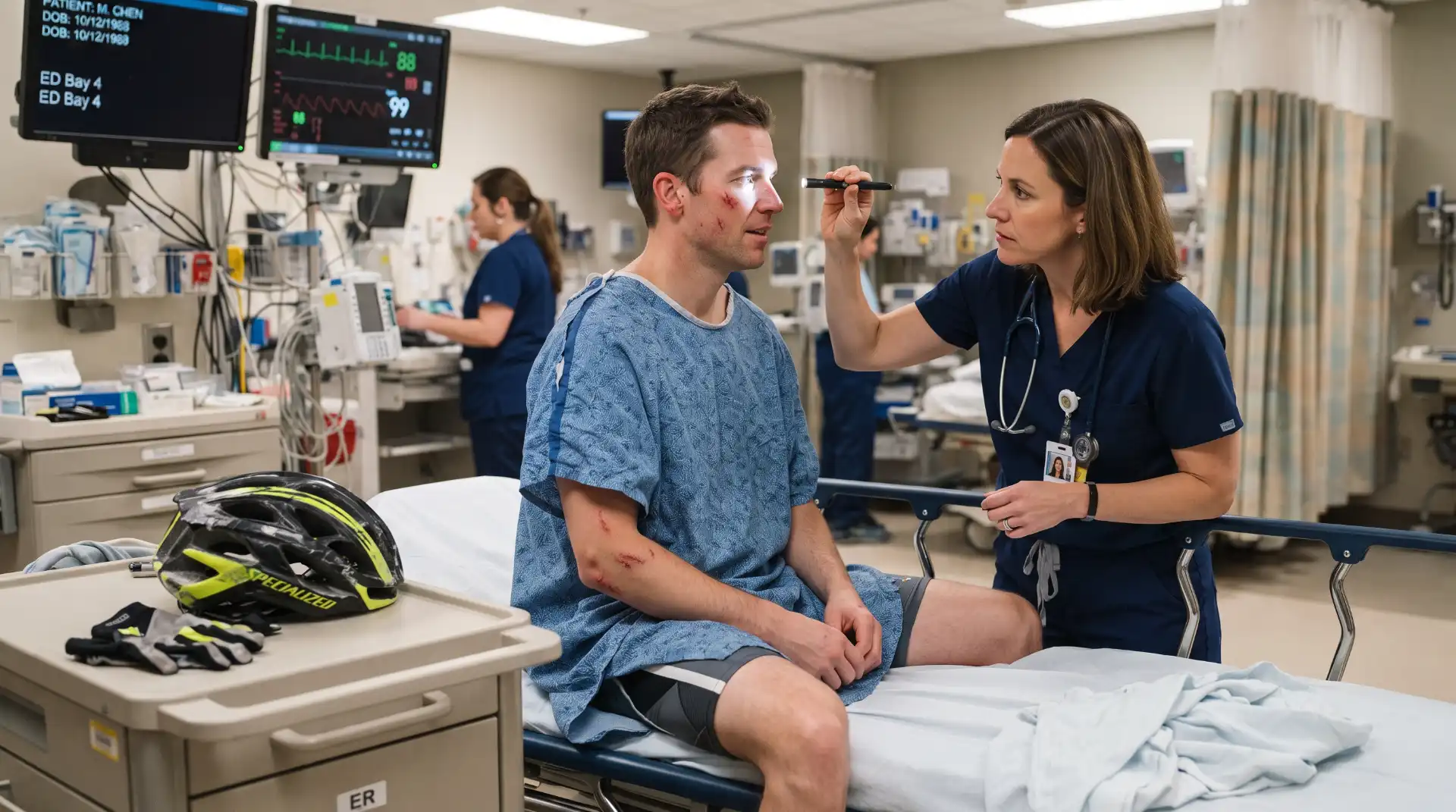
Spinal Injuries After a Bicycle Crash
The spinal column protects the spinal cord, which is an essential part of the nervous system.
A serious bicycle accident can damage the vertebrae, discs, ligaments, nerves, or spinal cord.
Spinal injuries can occur when the cyclist is struck by a vehicle, thrown onto the pavement, or subjected to a sudden twisting or compression force.
In severe cases, spinal cord damage can affect movement and sensation below the location of the injury.
MedlinePlus explains that spinal cord injuries can result in problems such as weakness, loss of sensation, paralysis, and difficulties involving bladder or bowel control.
The effects depend on the location and severity of the injury.
Cervical Spine Injuries
The cervical spine is located in the neck.
Because the head is connected to the cervical spine, sudden forces during a bicycle collision can put significant stress on the neck.
A cyclist may suffer a neck fracture, ligament injury, disc injury, nerve injury, or spinal cord injury.
Symptoms can include neck pain, stiffness, numbness, tingling, weakness, or difficulty moving the neck.
More serious neurological symptoms may involve the arms or legs.
A cyclist should not attempt to “walk it off” after a serious crash if a spinal injury is suspected.
Unnecessary movement can potentially worsen certain spinal injuries.
Emergency responders are trained to assess and stabilize people who may have sustained serious spinal trauma.
Thoracic and Lumbar Spine Injuries
Spinal injuries are not limited to the neck.
The middle and lower portions of the spine can also be injured during a bicycle accident.
A cyclist may experience fractures, disc injuries, nerve problems, or other trauma involving the thoracic or lumbar spine.
Lower-back injuries can cause significant pain and may interfere with standing, walking, lifting, sitting, or working.
A severe spinal cord injury can have consequences beyond pain. Depending on the location and severity of the injury, a person may experience weakness, paralysis, changes in sensation, or other neurological problems.
Recovery may require extensive rehabilitation.
Why Spinal Cord Injuries Can Be Life-Changing
A spinal cord injury can affect virtually every part of a person’s daily routine.
A person who was previously active may suddenly need mobility assistance. They may require a wheelchair, walker, braces, home modifications, specialized transportation, or assistance with personal care.
Employment can also be affected.
Some occupations may become difficult or impossible to perform after a severe spinal injury. Even when someone can return to work, they may need modified duties, reduced hours, or workplace accommodations.
The financial impact can therefore extend well beyond the original hospital bill.
Families may need to consider continuing medical care, rehabilitation, assistive equipment, home accessibility, transportation, and potential future care requirements.
Neck and Back Pain Should Not Always Be Dismissed
After a bicycle crash, soreness is common.
However, persistent or severe pain should not automatically be dismissed as ordinary soreness.
Pain accompanied by numbness, tingling, weakness, loss of coordination, or difficulty walking may indicate a more serious problem.
Cyclists should communicate their symptoms clearly to medical professionals.
It can also be useful to explain when the symptoms began and whether they are becoming better, worse, or changing over time.
Multiple Injuries Can Occur in the Same Bicycle Crash
A cyclist does not necessarily suffer only one injury.
For example, a rider may sustain a concussion while also suffering a fractured arm, shoulder injury, neck injury, and lower-back injury.
Another cyclist may suffer a traumatic brain injury together with a spinal injury and orthopedic injuries.
This can make recovery more complicated.
Different injuries may require different specialists and treatment plans. A cyclist may see emergency physicians, neurologists, orthopedic specialists, physical therapists, occupational therapists, or other healthcare professionals.
The combined effect of multiple injuries may also be greater than the effect of any single injury.
How Severe Bicycle Injuries Affect Daily Life
The consequences of a severe bicycle crash can extend far beyond physical pain.
An injured cyclist may struggle to return to normal activities.
A person who previously rode a bicycle every weekend may be unable to exercise. Someone who regularly cared for children may need help with childcare. A worker may be unable to perform their normal job duties.
Even simple activities such as cooking, driving, shopping, climbing stairs, or carrying groceries can become difficult.
A traumatic brain injury can also affect concentration and memory, making work or school challenging.
Spinal injuries can limit mobility and independence.
These changes can create emotional and financial stress for both the injured person and their family.
Medical Treatment After a Severe Bicycle Crash
Treatment depends on the type and severity of the injury.
A cyclist with a suspected brain injury may receive neurological evaluation and diagnostic testing. Depending on the circumstances, doctors may recommend observation, medication, activity restrictions, follow-up appointments, or rehabilitation.
A serious spinal injury may require immobilization, imaging, surgery, medication, physical therapy, or other treatment.
Rehabilitation can become a major part of recovery.
Physical therapy may focus on strength, flexibility, balance, mobility, and coordination. Occupational therapy may help an injured person relearn everyday tasks. Speech therapy may be appropriate for certain brain injuries affecting communication or swallowing.
Recovery timelines vary significantly.
Some people improve within weeks or months. Others may require years of rehabilitation or ongoing medical care.
The Importance of Following the Treatment Plan
Following medical recommendations can be an important part of recovery.
If a physician recommends follow-up appointments, physical therapy, activity restrictions, medication, or additional testing, the cyclist should discuss any concerns with the medical provider rather than simply stopping treatment.
Treatment can also provide documentation of how an injury progresses.
Medical records may show the initial diagnosis, symptoms, recommended treatment, follow-up visits, and continuing limitations.
Your existing article “The Importance of Getting Medical Help After a Bicycle Accident” can be linked here to provide readers with additional information about medical care following a collision.
Documenting a Severe Bicycle Injury
Medical records can be important after a serious bicycle crash.
Cyclists should keep copies of medical bills, treatment records, prescription information, therapy records, diagnostic results, and other relevant documents.
It may also be useful to keep a personal record of symptoms.
For example, a cyclist recovering from a brain injury might experience headaches, concentration problems, fatigue, or difficulty sleeping. Recording these changes may help the person communicate more accurately with healthcare providers.
Documentation may also become relevant if the cyclist later pursues an insurance claim or personal injury case.
Photographing the Bicycle and Accident Scene
When it is safe and practical to do so, photographs can help document the circumstances of a crash.
Images may show bicycle damage, vehicle damage, road conditions, traffic signs, lane markings, potholes, debris, visibility conditions, and the general accident location.
Photographs of visible injuries may also provide documentation of their progression.
However, injured cyclists should not delay emergency treatment simply to take photographs.
Medical safety comes first.
Preserving the Damaged Bicycle
The bicycle itself may contain important physical evidence.
Damage to the frame, wheels, handlebars, brakes, pedals, or other components may help document what happened during the collision.
If a bicycle may be relevant to an insurance claim or legal case, it is generally prudent to preserve it rather than immediately repairing, modifying, or disposing of it.
The same principle can apply to damaged safety equipment such as helmets.
Insurance Issues After a Bicycle Accident
A serious bicycle crash can involve multiple types of insurance depending on the circumstances.
If a motor vehicle driver caused the crash, the driver’s automobile liability insurance may become relevant.
In some situations, a cyclist may also have access to coverage through their own insurance policy or another applicable source of coverage.
Insurance rules differ significantly between states and individual policies.
Cyclists should be careful about making assumptions regarding coverage or liability before the facts of the accident have been reviewed.
An insurer may ask for statements, medical information, photographs, or other documentation.
For serious injuries, a cyclist may want to obtain legal advice before making significant decisions about a claim.
Who May Be Responsible for a Severe Bicycle Crash?
Responsibility depends on what caused the accident.
A negligent driver may be responsible if their actions caused the collision. Examples could include distracted driving, failure to yield, unsafe passing, speeding, or other traffic violations.
However, driver negligence is not the only possibility.
A bicycle crash may involve defective bicycle equipment, dangerous road conditions, construction hazards, inadequate signage, or other circumstances.
In some cases, more than one party may potentially share responsibility.
Determining liability requires examining the evidence and applying the laws of the state where the accident occurred.
Distracted Driving and Serious Bicycle Injuries
Distracted driving remains a significant concern for cyclists.
A driver looking at a phone, adjusting a navigation system, eating, talking to passengers, or focusing on something other than the roadway may fail to notice a bicycle.
Because bicycles are smaller than motor vehicles, drivers need to remain attentive to cyclists and other vulnerable road users.
A collision that might result in relatively limited vehicle damage can cause devastating injuries to a cyclist.
When a cyclist is struck by a vehicle, evidence of driver distraction may become relevant to determining responsibility.
Intersection Crashes Can Cause Severe Injuries
Intersections are common locations for bicycle and vehicle conflicts.
A driver turning across a bicycle lane, failing to yield, running a traffic signal, or failing to notice a cyclist traveling through an intersection can cause a serious collision.
The resulting impact can throw the cyclist into traffic or onto the pavement.
Your website can also internally connect this section to existing content concerning bicycle right-of-way and intersection accidents where appropriate.
Hit-and-Run Bicycle Accidents
A hit-and-run collision can make an already difficult situation even more complicated.
If a driver leaves the scene, the cyclist may have limited information about the vehicle or driver.
Witnesses, security cameras, traffic cameras, nearby businesses, vehicle debris, and other evidence may help investigators identify the vehicle.
A cyclist should report the accident to law enforcement and seek medical attention when appropriate.
The sooner important evidence is identified, the less likely it may be that useful information disappears.
Severe Injuries and Lost Income
A serious bicycle injury can affect a person’s ability to work.
Someone with a traumatic brain injury may have difficulty concentrating or completing tasks. A person with a spinal injury may have physical limitations that prevent them from performing manual work.
Even temporary restrictions can result in lost wages.
A severe injury may also reduce future earning capacity if the person cannot return to their previous occupation.
Documentation of missed work, lost wages, employment restrictions, and changes in earning ability can therefore become important when evaluating the financial consequences of an accident.
Long-Term Costs of Brain and Spinal Injuries
The financial impact of a serious injury may continue long after the emergency treatment ends.
A cyclist may need rehabilitation, follow-up appointments, medication, assistive devices, home modifications, transportation assistance, or continuing therapy.
Some people may require ongoing care for years.
Future costs can be particularly important in cases involving permanent disabilities.
For example, someone with a significant spinal cord injury may require mobility equipment or accessibility modifications. A person with a serious brain injury may require continued neurological treatment, therapy, or assistance with daily activities.
The potential long-term consequences should therefore be considered when evaluating a serious injury claim.
What Cyclists Should Do Immediately After a Serious Crash
After a severe bicycle accident, the first priority should always be medical safety.
Call 911 when emergency assistance is needed. Do not unnecessarily move someone who may have a spinal injury unless there is an immediate danger that requires movement.
Once medical needs have been addressed, the cyclist or a family member can begin preserving important information.
The accident report, witness information, photographs, medical documentation, insurance information, bicycle condition, and records of financial losses may all become relevant later.
Cyclists should also avoid posting detailed statements about the accident or their injuries on social media while an insurance claim or legal case is being considered.
When Should an Injured Cyclist Speak With an Attorney?
Not every bicycle accident requires an attorney.
However, legal advice may be particularly important when the cyclist has suffered severe injuries, faces significant medical expenses, cannot work, has permanent impairment, or believes another party’s negligence caused the collision.
An attorney can review the facts, identify potentially responsible parties, explain applicable state laws, communicate with insurers, and help an injured cyclist understand potential legal options.
The rules governing bicycle accidents differ throughout the United States.
Statutes of limitations, comparative-fault rules, insurance requirements, government-claim procedures, and other legal requirements can vary by state.
For that reason, cyclists should seek advice based on the jurisdiction where the accident occurred.
Why Severe Injuries Require More Than an Initial Medical Bill
One of the biggest mistakes people can make after a serious injury is thinking only about the first hospital bill.
A severe brain or spinal injury can result in continuing expenses.
There may be rehabilitation, follow-up treatment, medication, physical therapy, lost income, transportation costs, and other financial consequences.
The injured person’s ability to work and participate in everyday activities may also change.
A complete evaluation of the accident may therefore require considering both current and future consequences.
Helmet Use Can Help Reduce Head Injury Risk
Helmets are an important part of bicycle safety.
The National Highway Traffic Safety Administration explains that bicycle helmets can reduce the risk of head injuries for bicyclists involved in crashes.
However, helmets cannot eliminate every type of injury.
A helmet cannot prevent every concussion, spinal injury, fracture, or soft-tissue injury. A cyclist wearing a helmet can still suffer severe trauma during a collision with a motor vehicle.
This is why helmet use should be viewed as one part of a broader bicycle-safety strategy.
Your website’s article “Why Helmet Use Matters More Than Ever in E-Bike and Bike Crashes” can provide an internal resource for readers interested in helmet safety.
E-Bikes and Severe Injuries
Electric bicycles have become increasingly common throughout the United States.
E-bikes can travel at higher speeds than some traditional bicycles, depending on the model and riding conditions. This can create different crash dynamics.
A collision involving an e-bike can result in serious injuries to the rider, particularly when the rider is struck by a motor vehicle or loses control at speed.
As e-bike use continues to grow, riders should understand local rules regarding bicycle lanes, roadway use, helmets, equipment, and speed restrictions.
The legal issues surrounding an e-bike crash may also depend on the type of e-bike, applicable state law, and the circumstances of the collision.
The Emotional Impact of a Severe Bicycle Crash
Physical injuries are only part of the aftermath.
A cyclist who survives a serious collision may experience fear about riding again.
Some people become anxious around traffic or intersections. Others may experience stress when passing the location where the accident happened.
A traumatic brain injury may also cause changes in mood, behavior, sleep, or emotional regulation.
Family members can experience stress as well, particularly when they become caregivers for someone who previously lived independently.
Emotional and psychological symptoms should be discussed with appropriate healthcare professionals.
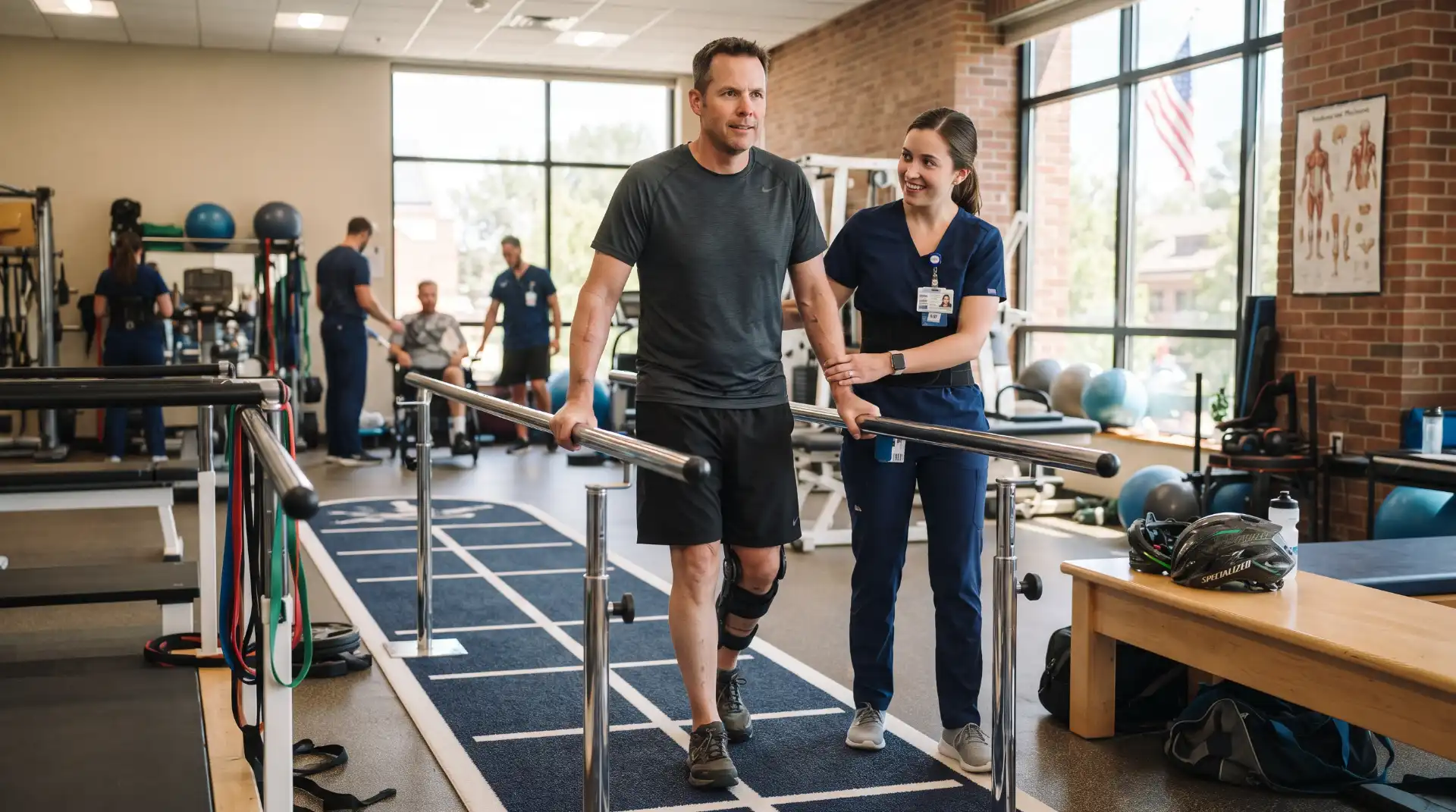
Recovery May Take Time
There is no single recovery timeline for severe bicycle crash injuries.
Two cyclists involved in seemingly similar accidents can experience very different outcomes.
One person may recover after several weeks of treatment, while another may require months or years of rehabilitation.
Recovery may involve setbacks.
A person may initially believe they are improving and later experience symptoms that require additional evaluation.
Following medical advice and attending recommended follow-up appointments can help ensure that changes in symptoms are properly addressed.
Building a Strong Record After a Serious Bicycle Accident
When a cyclist suffers severe injuries, maintaining organized records can make the aftermath easier to manage.
Medical bills, insurance correspondence, accident reports, photographs, employment records, therapy appointments, prescriptions, and other documents should be kept in an organized location.
It can also be helpful to maintain a timeline of medical treatment and major changes in symptoms.
If an attorney becomes involved, having organized documentation can make it easier to review the circumstances of the accident.
Severe Bicycle Crash Injuries Can Have Lasting Consequences
A bicycle crash can leave much more than a damaged bicycle behind.
A serious head injury can affect memory, concentration, balance, mood, and communication. A spinal injury can affect mobility, sensation, independence, and employment.
The financial consequences can also be substantial.
Emergency treatment is only the beginning for some injured cyclists. Rehabilitation, follow-up medical care, lost wages, long-term disability, and continuing assistance may become part of the recovery process.
That is why serious bicycle accidents deserve careful medical and legal attention.
Final Thoughts
Severe bicycle crash injuries can involve the head, brain, neck, spine, and other parts of the body. Some injuries are immediately obvious, while others may become apparent only after the initial shock of the accident has passed.
Concussions and traumatic brain injuries can affect memory, concentration, balance, vision, sleep, mood, and everyday functioning. Spinal injuries can result in severe pain, weakness, loss of sensation, paralysis, and long-term mobility challenges.
Medical attention should always come first after a serious crash.
If emergency symptoms are present, call 911. If a spinal injury is suspected, avoid unnecessary movement and wait for emergency responders unless immediate danger requires otherwise.
After medical needs have been addressed, preserving evidence and maintaining organized records can help document the accident and its consequences.
Depending on the circumstances, an injured cyclist may have a claim involving medical expenses, lost income, property damage, rehabilitation costs, future losses, or other damages. However, the specific legal rights available to an injured cyclist depend on state law and the facts of the accident.
If you or a family member has suffered serious injuries in a bicycle accident, consider speaking with a qualified healthcare professional about your medical needs and a qualified bicycle accident attorney about your legal options.