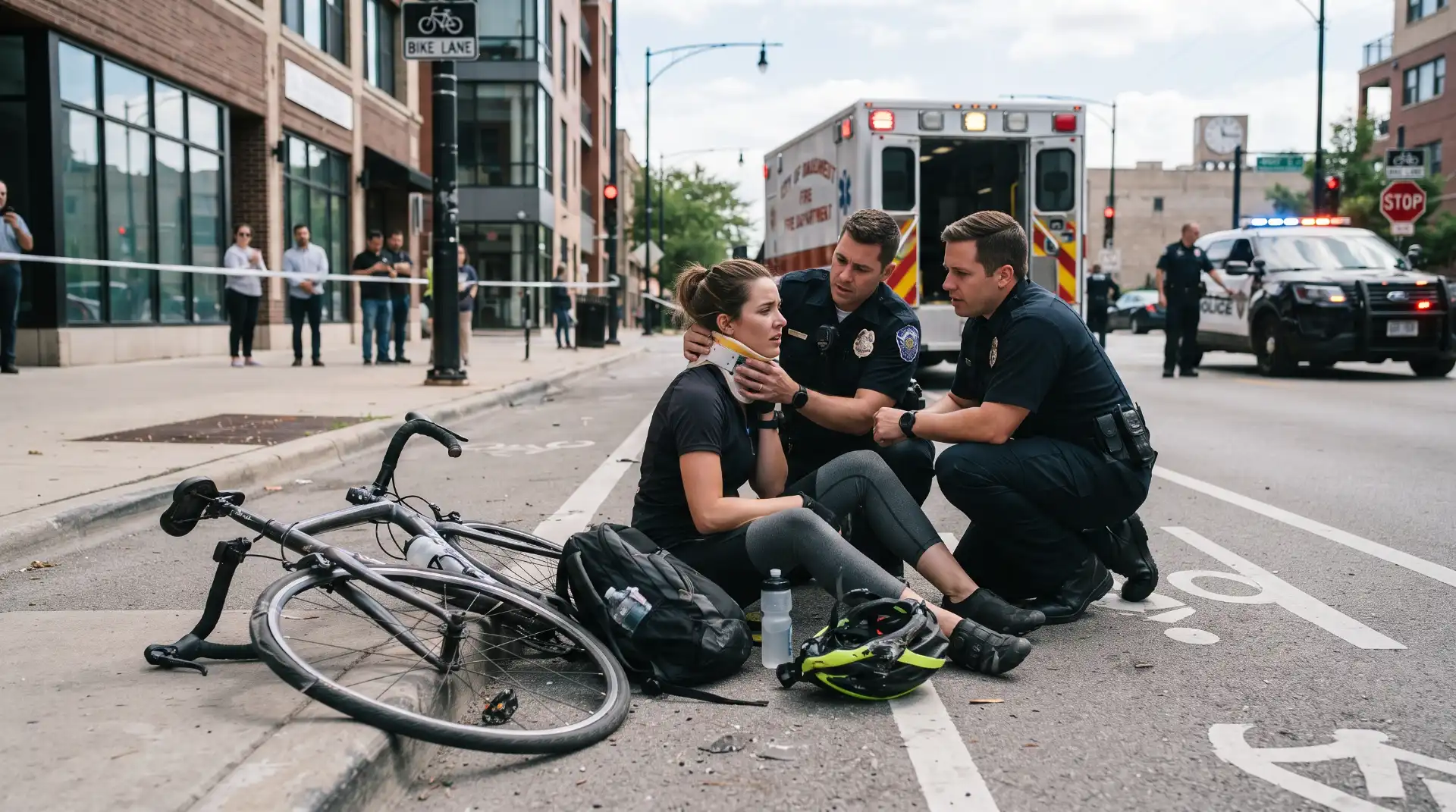
Large SUVs and pickup trucks may increase the severity of bicycle crash injuries because of their weight, height, front-end shape, and larger blind areas. These features do not automatically establish fault. However, they may affect where a vehicle strikes a cyclist, what happens to the rider after impact, and which injuries result from the collision.
Bicyclists have little physical protection during a crash. Unlike vehicle occupants, riders do not have seat belts, airbags, reinforced doors, or an enclosed passenger compartment. When a bicycle collides with a large SUV or pickup truck, the difference in size and weight can place the cyclist at substantial risk.
Vehicle type is only one part of a bicycle accident investigation. Speed, visibility, road design, driver conduct, bicycle positioning, lighting, weather, and traffic signals may also affect the outcome. Investigators may need to examine both the cause of the crash and the way the vehicle’s design influenced the injuries.
Why Vehicle Size Matters in a Bicycle Crash
Large SUVs and pickup trucks generally weigh more than compact cars and sedans. A heavier vehicle carries more energy while moving. When that energy transfers during a collision, a cyclist may experience a forceful impact even when the vehicle was traveling at a relatively moderate speed.
Weight alone does not explain every injury. The shape and height of the vehicle also affect the crash. Many large vehicles have tall, blunt front ends. A passenger car may first contact a cyclist near the legs or bicycle frame. A tall SUV or pickup may strike the pelvis, abdomen, chest, shoulders, or head.
The Insurance Institute for Highway Safety has examined differences between bicycle crashes involving cars and SUVs. Its research found that SUV crashes were associated with more severe head injuries. SUVs were also more likely to throw cyclists to the ground and create injuries from contact with the roadway or lower vehicle components.
Readers can review the Insurance Institute for Highway Safety research on SUVs and bicyclist injuries for more information about vehicle height and impact location.
Higher Front Ends May Strike a Cyclist’s Torso
The front end of a sedan often sits below the upper body of an adult cyclist. Depending on the crash angle, a sedan may strike the bicycle or legs before the cyclist moves onto the hood. The cyclist can still suffer severe or fatal injuries, but the movement of the body may differ from a crash involving a taller vehicle.
A large pickup truck or SUV may have a hood leading edge that reaches the cyclist’s hips, abdomen, or chest. Direct contact with these areas may cause injuries to the ribs, lungs, liver, spleen, kidneys, spine, or pelvis. A higher contact point may also affect the cyclist’s balance and body rotation.
Instead of moving onto the hood, a cyclist may be pushed forward, knocked downward, or pulled toward the vehicle’s underside. The exact movement depends on the vehicle’s speed, braking, front-end design, collision angle, and the cyclist’s position.
The height of the rider also matters. A smaller adult, teenager, or child may experience contact at an even higher part of the body. A front end that strikes an adult near the abdomen could strike a child near the chest, neck, or head.
Why Ground Contact Can Cause Serious Injuries
The initial vehicle impact is not always the only source of injury. A cyclist may strike the pavement, curb, traffic barrier, another vehicle, or roadside object after being hit. This secondary impact can cause traumatic brain injuries, facial fractures, spinal injuries, broken bones, and severe abrasions.
Research comparing cars and SUVs suggests that SUVs may be more likely to knock bicyclists to the ground. The rider could land near the tires or under the vehicle instead of moving over the hood. That movement may create a risk of crushing injuries or a secondary tire impact.
Ground-related injuries can be difficult to separate from injuries caused by direct vehicle contact. Accident reconstruction professionals may study damage patterns, blood or tissue evidence, roadway marks, clothing damage, bicycle deformation, and medical findings to understand the sequence.
A helmet may reduce the risk of certain head injuries, but no helmet can prevent every injury in a high-force collision. Helmet use also does not excuse a driver from following traffic laws or exercising reasonable care around cyclists.
More information about this issue is available in our article discussing helmet use in bicycle and e-bike crashes.
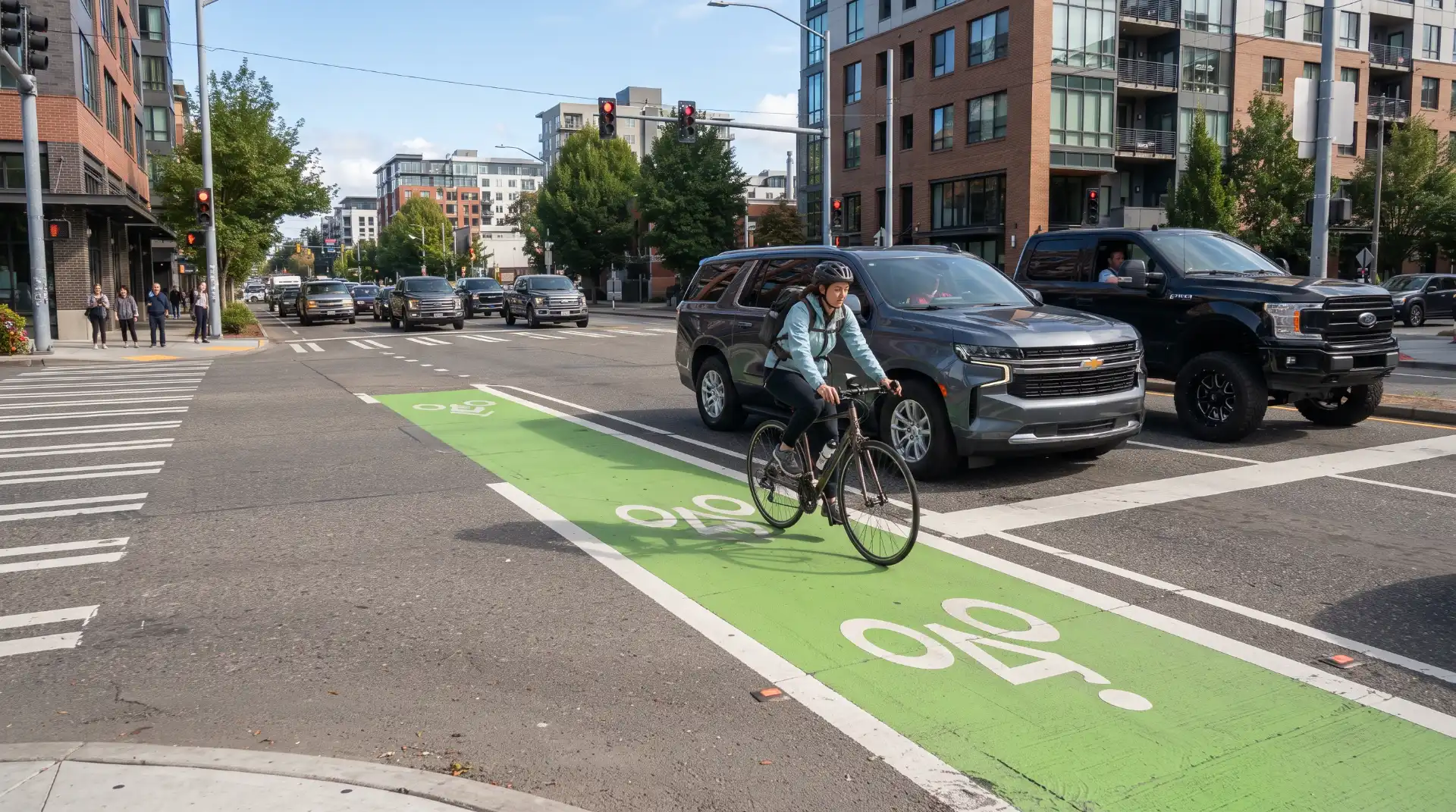
Large Vehicles May Have Bigger Front Blind Areas
Drivers often associate blind spots with areas beside or behind a vehicle. Large SUVs and pickup trucks may also have substantial areas directly in front of the hood that the driver cannot easily see.
A tall hood can obscure a cyclist who is close to the front bumper. This problem may arise at stop signs, traffic lights, crosswalks, parking lots, driveways, and congested intersections. A driver who saw the cyclist earlier may lose sight of the rider when the bicycle moves into the front blind area.
Front visibility may become more limited when the vehicle has an elevated suspension, an aftermarket lift kit, a large grille, hood accessories, or oversized tires. Driver height, seat position, windshield design, and surrounding traffic can create additional visibility issues.
A cyclist may enter this area while waiting at a red light or moving through an intersection. When traffic begins moving, the driver may accelerate without realizing that a bicycle remains directly ahead.
Right-Turn Crashes Involving SUVs and Pickup Trucks
Right-turn collisions are a common concern for cyclists. A driver may pass a bicycle and turn across the rider’s path, or the cyclist may approach alongside a vehicle that is preparing to turn.
Large SUVs and pickups can create particular concerns because of their height, length, mirrors, and passenger-side blind areas. A driver may fail to detect a bicycle beside the vehicle, especially when the cyclist is near the front passenger door or front wheel.
Some bicycle lanes continue straight while motor vehicles must cross the lane to turn. Drivers generally need to check mirrors, look over their shoulders, signal, and yield when required by state or local law. The exact traffic rules vary among jurisdictions.
A turning vehicle may strike the cyclist with its front corner. The rider could then fall near the side or beneath the vehicle. Investigators may examine whether the driver used a turn signal, checked the bicycle lane, passed the cyclist shortly before turning, or entered the turn at an unsafe speed.
Pickup Truck Length Can Affect Turning Movements
Full-size pickup trucks can be considerably longer than passenger cars, particularly when they have extended cabs and long beds. Their turning paths may require additional space. The rear portion of the vehicle may track differently from the front wheels during a turn.
A driver could believe that the front of the truck has cleared a cyclist while the side or rear remains close to the bicycle. Trailers, tow hitches, toolboxes, wide mirrors, and cargo may create added hazards.
A cyclist may also become trapped between a long vehicle and a curb, parked car, median, or construction barrier. Limited escape space can make it difficult for the rider to avoid contact once the vehicle starts moving toward the bicycle lane.
Backing Collisions and Parking Lot Risks
Large SUVs and pickup trucks may create visibility problems while backing out of driveways and parking spaces. A bicycle can enter the vehicle’s path quickly, and the driver may rely heavily on mirrors, cameras, or parking sensors.
Backup cameras can improve visibility, but they do not replace a complete visual check. Camera lenses may become dirty, damaged, obstructed, or affected by glare. The display may also provide a limited field of view.
Some vehicles include rear automatic braking or cross-traffic alert systems. These features may detect certain objects, but their performance can vary based on the cyclist’s speed, approach angle, lighting, weather, and sensor condition.
When a backing collision occurs, electronic system records may show whether the driver received a warning. Video from the vehicle, parking lot, home security system, or nearby business may also help establish when the cyclist entered the area.
Vehicle Speed Can Increase the Consequences
Speed remains one of the most significant factors in crash severity. A small increase in vehicle speed can produce a substantial increase in impact energy. Higher speeds also reduce the time available for both the driver and cyclist to react.
A driver who is speeding may have less time to recognize a cyclist, apply the brakes, or change direction. Even when the driver brakes before contact, investigators may need to determine the vehicle’s speed at the moment of impact.
Vehicle height can compound the consequences of speed. A tall front end may apply force directly to the cyclist’s torso while the vehicle’s momentum pushes the rider toward the pavement.
Speed limits do not always represent a safe speed for every condition. Darkness, rain, glare, construction, traffic congestion, narrow lanes, and limited visibility may require drivers to travel below the posted limit.
Common Injuries in Large-Vehicle Bicycle Collisions
Bicycle crashes involving SUVs and pickup trucks can produce injuries throughout the body. The location and severity depend on the point of contact, vehicle speed, rider position, protective equipment, secondary impact, and whether the vehicle passes over the cyclist.
Head injuries may include concussions, skull fractures, brain bleeding, diffuse axonal injuries, and other forms of traumatic brain injury. Some symptoms may not become obvious immediately. Confusion, nausea, sensitivity to light, memory problems, dizziness, and changes in behavior may develop after the crash.
Chest and abdominal injuries may include rib fractures, lung damage, internal bleeding, and injuries to internal organs. These conditions can require emergency evaluation even when the cyclist does not see substantial external injuries.
Orthopedic injuries may include fractures of the arms, wrists, shoulders, pelvis, hips, legs, ankles, or feet. Spinal injuries may affect the neck, back, nerves, movement, or sensation.
Road contact can cause abrasions, lacerations, embedded debris, infections, and scarring. A cyclist may also experience emotional distress, sleep problems, anxiety around traffic, or difficulty returning to riding.
Our guide about getting medical help after a bicycle accident explains why prompt evaluation and follow-up care can matter.
Does Driving a Large Vehicle Automatically Establish Fault?
No. Owning or driving a large SUV or pickup truck does not automatically make someone responsible for a bicycle crash. Liability generally depends on conduct, traffic laws, road conditions, and the facts surrounding the collision.
A driver may bear responsibility for speeding, distraction, unsafe passing, failure to yield, improper turning, driving under the influence, opening a door, crossing a bicycle lane, or failing to maintain a proper lookout.
A vehicle owner may face separate questions when another person was driving. An employer could also become involved when the driver was performing job duties. Commercial use, negligent vehicle maintenance, or negligent entrustment may expand the investigation.
Vehicle design may become relevant when a defective safety system or component contributed to the crash. However, proving a product-related claim can require technical analysis of the vehicle, sensors, warnings, software, and design.
Comparative Negligence in Bicycle Accident Cases
An insurer may argue that the cyclist contributed to the collision. Common allegations involve riding against traffic, ignoring a signal, leaving a bicycle lane, using inadequate lighting, traveling too quickly, or failing to notice the vehicle.
These allegations do not automatically defeat a claim. Many states use comparative negligence rules that allow responsibility to be divided among the parties. The effect on damages depends on the law of the state where the crash occurred.
Evidence should be reviewed before accepting an insurer’s description of fault. A driver may have failed to see the cyclist because of distraction or an inadequate visual check. A poorly designed intersection may have limited visibility. Traffic-camera footage might show that the cyclist had the right of way.
Read our overview of bicycle accident laws and cyclists’ legal rights for more information about negligence and traffic rules.
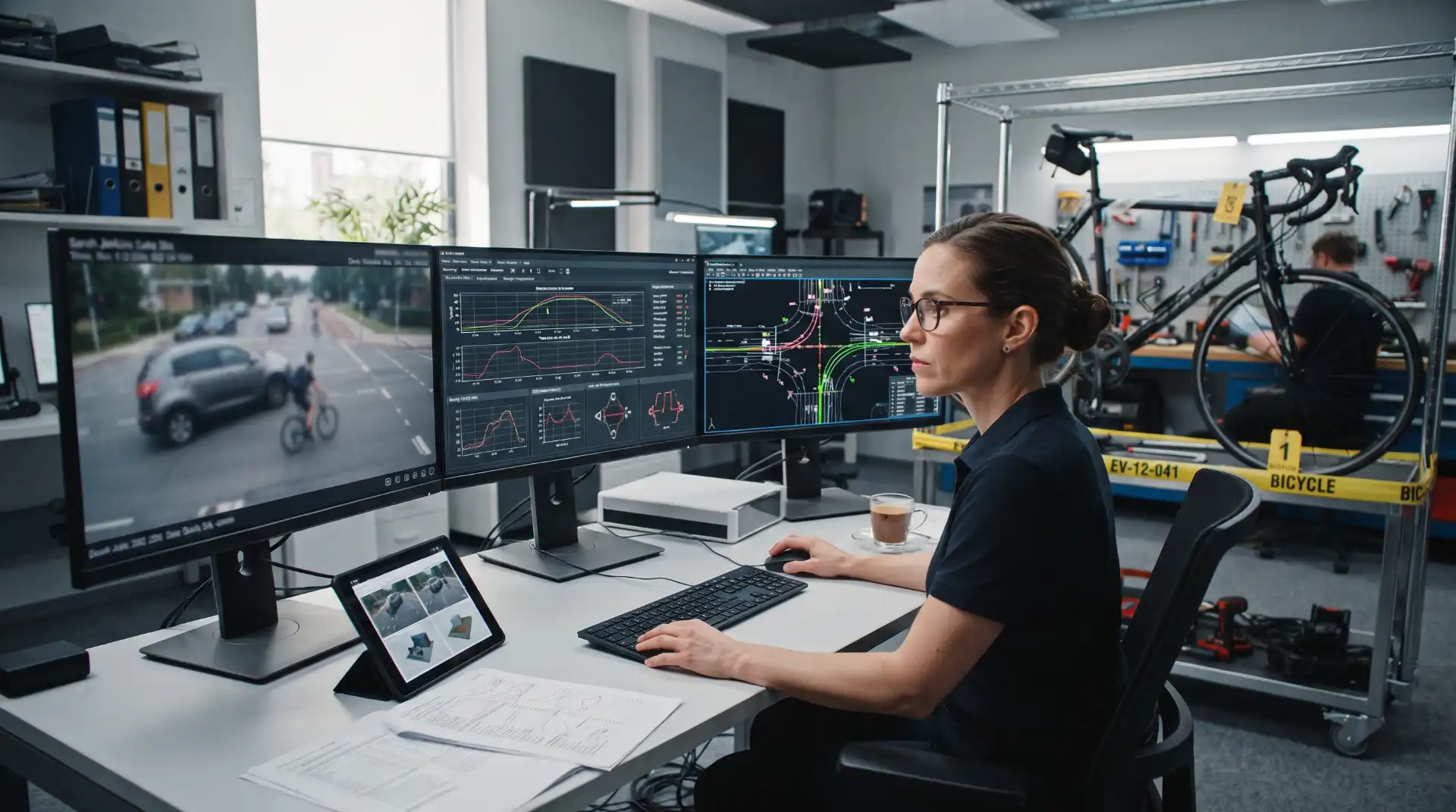
Evidence That May Establish What Happened
Evidence from the scene may help establish both fault and injury mechanics. Photographs should capture the bicycle, vehicle, debris, road surface, traffic controls, bicycle lane, skid marks, visibility obstructions, and surrounding area.
The damage to the SUV or pickup truck can reveal the point of impact. Marks on the bumper, grille, hood, mirror, door, wheel, or undercarriage may help reconstruct the cyclist’s movement.
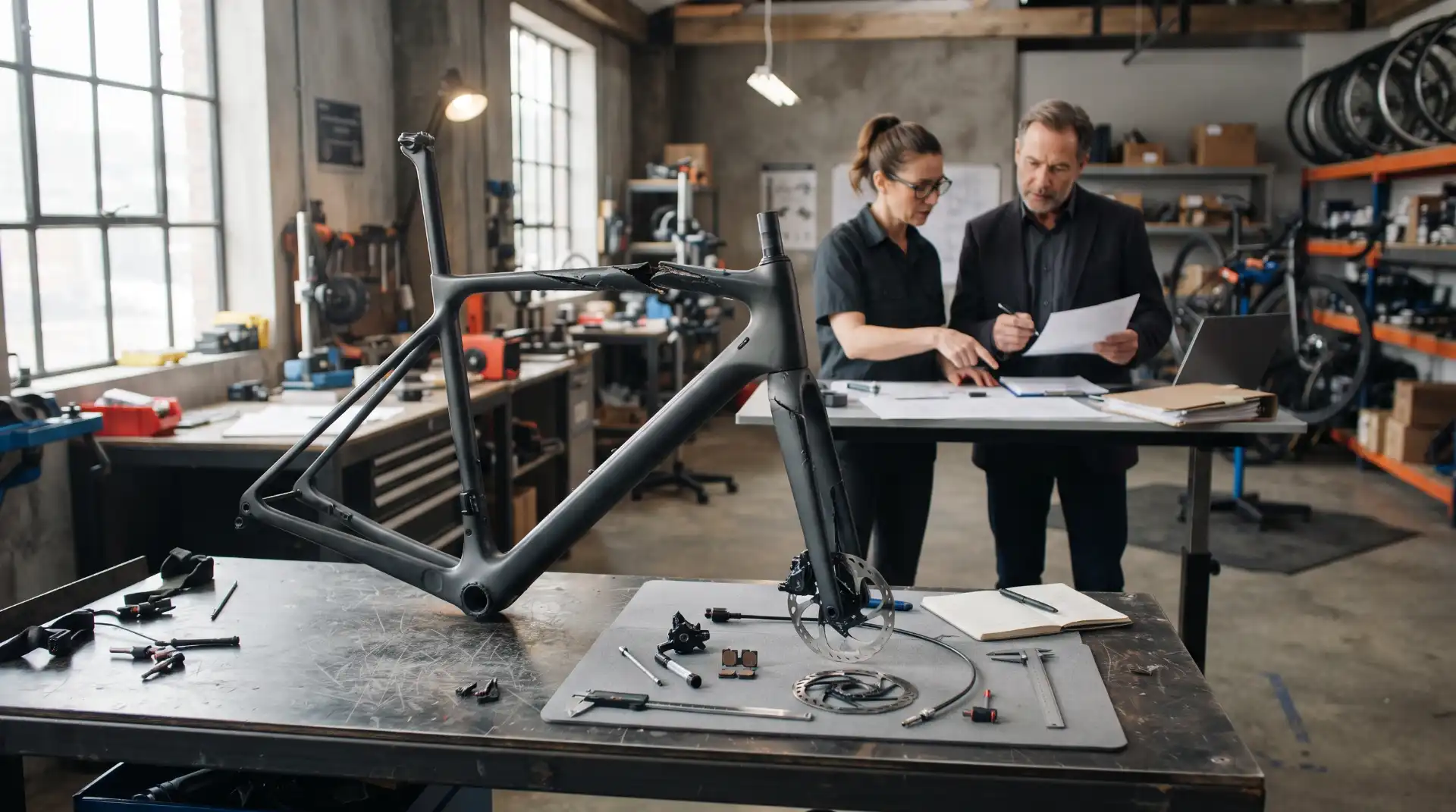
The bicycle should be preserved in its post-crash condition. Bent wheels, frame fractures, paint transfer, tire marks, damaged pedals, and broken components may provide valuable information. Repairs or disposal can remove evidence.
Witnesses may describe vehicle speed, traffic signals, lane positions, braking, and statements made after the crash. Nearby homes, businesses, buses, rideshare vehicles, and traffic systems may have recorded video.
Electronic Data From the SUV or Pickup Truck
Modern vehicles can contain several forms of electronic information. An event data recorder may preserve details about vehicle speed, braking, accelerator position, seat belt status, and other conditions around a crash.
Advanced driver-assistance systems may use forward cameras, radar, ultrasonic sensors, or other equipment. Depending on the vehicle, the system may record warnings, object detections, braking commands, or diagnostic errors.
Some SUVs and pickup trucks include automatic emergency braking that can detect cyclists under certain conditions. A system may fail to activate because of speed, darkness, weather, sensor obstruction, approach angle, software limitations, or other factors.
Dash cameras, surround-view cameras, connected vehicle applications, navigation systems, and mobile phones may contain additional records. Because some information can be overwritten, timely preservation may be important.
Why Vehicle Inspection May Matter
A physical inspection can document the vehicle’s measurements, front-end height, damage, tire condition, lighting, mirrors, cameras, sensors, and aftermarket modifications.
Investigators may measure the hood leading edge, bumper, grille, ground clearance, and cyclist contact areas. These measurements can help explain which body regions encountered the vehicle.
Aftermarket lift kits, grille guards, oversized tires, suspension changes, and other modifications may alter vehicle height or front-end geometry. Their presence does not automatically establish negligence, but they may affect visibility and crash mechanics.
Mechanical issues can also matter. Defective brakes, worn tires, broken lights, misaligned sensors, or neglected maintenance could contribute to a driver’s inability to avoid the collision.
Medical Records Can Help Explain Injury Mechanics
Medical documentation can do more than identify the cyclist’s diagnosis. Injury locations may help reconstruction professionals understand the sequence of contact.
For example, bruising or fractures at a particular height may correspond with the vehicle’s bumper, grille, hood edge, or mirror. Injuries to the back of the head may indicate ground contact, while tire-pattern evidence may support a rollover sequence.
Emergency records, imaging studies, surgical reports, rehabilitation notes, photographs, and physician observations can provide a timeline. Cyclists should describe all symptoms accurately rather than limiting the report to the most painful injury.
Follow-up care may identify injuries that were not apparent during the initial examination. Consistent medical records can also document the effect of the injuries on mobility, work, sleep, and daily activities.
Possible Damages After a Serious Bicycle Crash
A bicycle accident claim may include medical expenses, rehabilitation costs, lost income, reduced earning ability, damaged property, pain, emotional distress, and other losses recognized under state law.
Future treatment may become relevant when the cyclist needs additional surgery, physical therapy, assistive equipment, medication, or long-term care. Medical professionals and economic specialists may help estimate these future needs.
Property losses may extend beyond the bicycle. A collision can damage a helmet, cycling computer, phone, camera, clothing, lights, bags, and other equipment.
The available damages depend on the evidence, applicable law, insurance coverage, and facts of the individual case. Our article about bicycle accident injuries and recoverable damages provides additional information.
What to Do After a Collision With a Large Vehicle
Seek emergency assistance when anyone has suffered injuries. A cyclist should obtain medical evaluation even when they initially feel able to stand or walk. Shock and adrenaline can conceal symptoms.
When possible, photograph the SUV or pickup truck before it leaves or moves. Include the license plate, vehicle identification details, damage, wheel position, bicycle location, roadway, signs, signals, and bicycle lane.
Obtain the driver’s name, contact information, insurance details, and employer information when the vehicle was being used for work. Collect witness names and contact details.
Preserve the bicycle, helmet, clothing, electronic devices, and damaged equipment. Avoid repairing or discarding these items before they have been documented.
Report the crash to the appropriate law enforcement agency. Ask where and when the collision report may become available. Keep copies of medical bills, repair estimates, wage information, photographs, and communications with insurers.
Our step-by-step guide about what to do after a bicycle accident provides further information about documenting the scene and protecting evidence.
Safety Measures for Drivers of SUVs and Pickup Trucks
Drivers can reduce risk by actively checking for cyclists before turning, backing, opening doors, entering bicycle lanes, or pulling away from traffic signals. Mirrors and cameras can help, but drivers should not rely on technology alone.
Drivers should leave adequate passing distance and avoid moving back into the lane too quickly. They should also use turn signals early and reduce speed near intersections, schools, trails, and areas with bicycle traffic.
Before driving a large vehicle, motorists can adjust the seat and mirrors to improve visibility. Cameras and sensors should remain clean and functional. Aftermarket modifications should not obstruct lights, sensors, or sightlines.
Safety Considerations for Cyclists
Cyclists can improve visibility by using legally required lights and reflectors. Bright or contrasting clothing may also help drivers notice a rider, particularly during low-light conditions.
Riders should avoid remaining beside large vehicles when approaching intersections. When practical and lawful, positioning the bicycle where the driver can see it may reduce exposure to side blind areas.
Eye contact can provide useful information, but it does not confirm that the driver has recognized the cyclist. Riders should watch the vehicle’s wheels, turn signals, and movement.
These precautions can reduce risk, but they do not transfer a driver’s legal duties to the cyclist. Motorists remain responsible for operating their vehicles with reasonable care.
Large Vehicles and the Safe System Approach
Bicycle safety cannot depend solely on individual riders and drivers. Road design, vehicle design, enforcement, speed management, and post-crash care also affect outcomes.
Protected bicycle lanes can create separation between cyclists and large vehicles. Intersection treatments, dedicated signal phases, daylighting, raised crossings, and lower speed limits may reduce conflict points.
Vehicle manufacturers can also improve cyclist detection, automatic emergency braking, direct visibility, camera coverage, and front-end design. These measures may help prevent crashes or reduce injury severity.
The U.S. Department of Transportation’s Safe System Approach recognizes that safer people, vehicles, roads, speeds, and post-crash care must work together. Serious crashes may still occur when one layer fails, so the transportation system should include multiple protections.
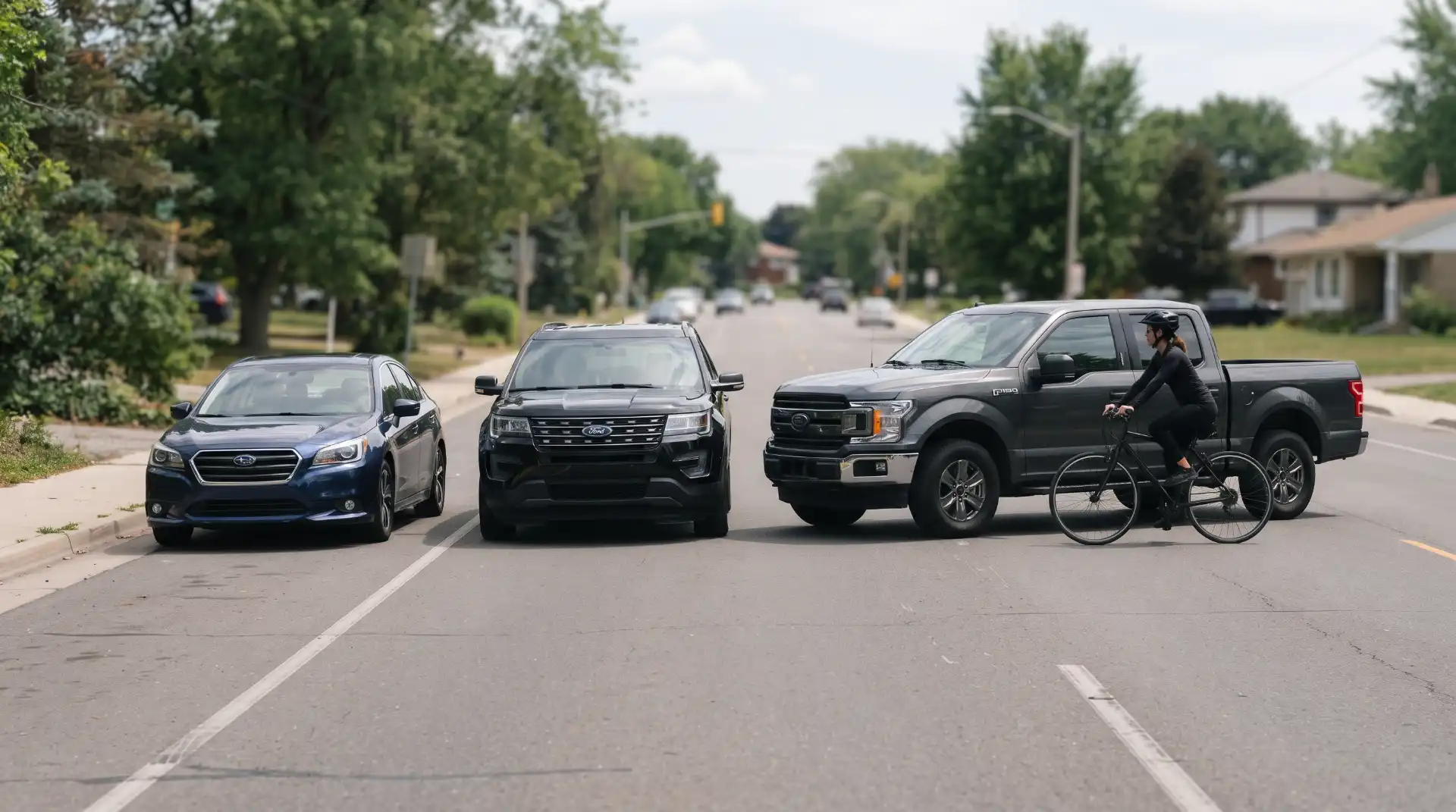
Can Large SUVs and Pickup Trucks Increase Bicycle Crash Severity?
Yes. Large SUVs and pickup trucks may increase bicycle crash severity because their taller and often more vertical front ends can strike a cyclist higher on the body. Their weight, blind areas, length, and ground clearance can also influence the collision.
This does not mean every crash involving a large vehicle produces severe injuries or that the large-vehicle driver is automatically at fault. Each case requires an examination of driver conduct, cyclist movement, speed, road design, visibility, vehicle data, and physical evidence.
A careful investigation can identify where the initial impact occurred, whether the cyclist struck the ground or passed beneath the vehicle, and whether the driver had enough time and visibility to avoid the crash.
Contact Our Bicycle Accident Attorneys
Collisions involving SUVs and pickup trucks may produce complex injuries and extensive evidence. Our bicycle accident attorneys can review the crash report, vehicle damage, medical records, available video, electronic data, and insurance coverage.
Legal review may help identify the parties involved and explain the options available under the law of the state where the collision occurred.