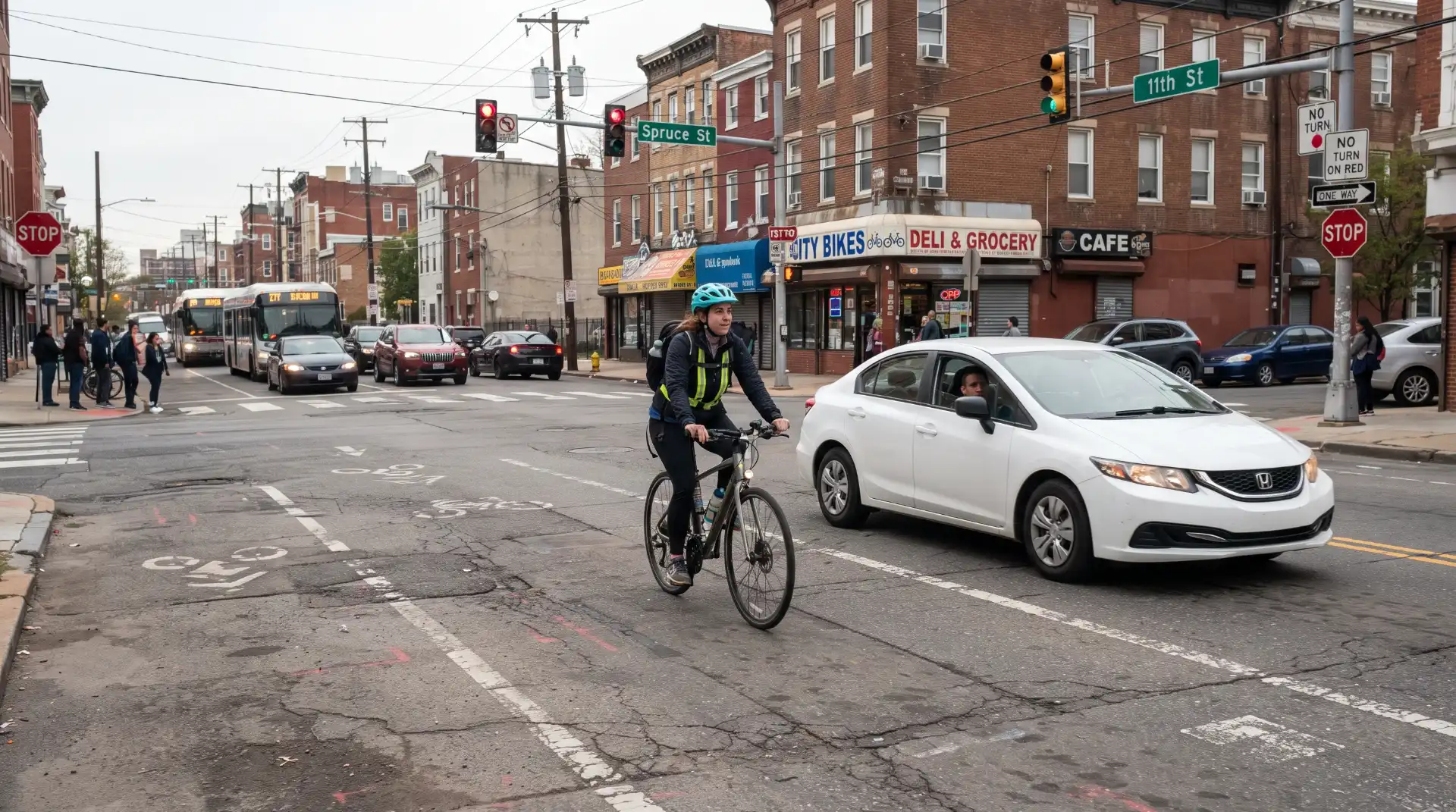
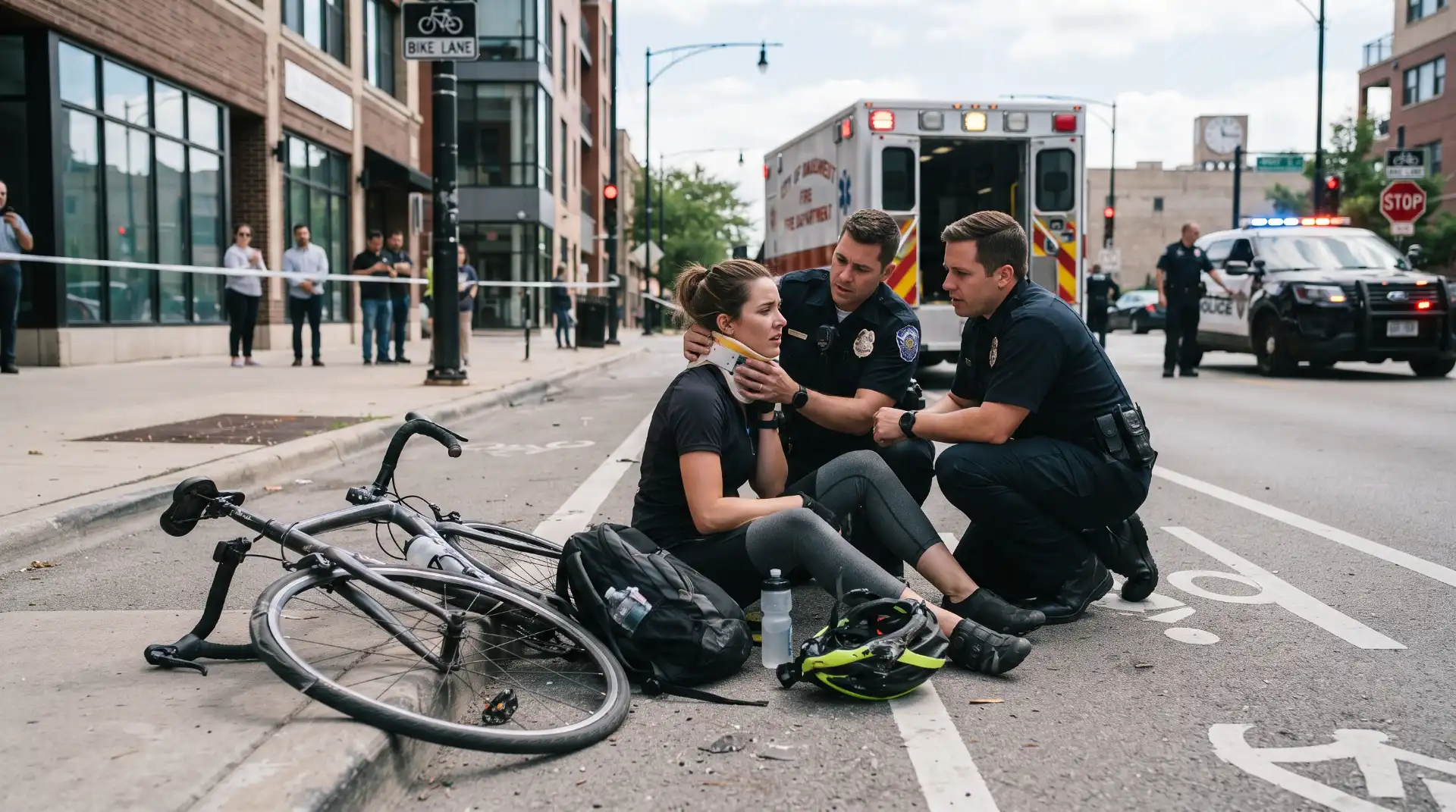
A bicycle ride through a city should not become a life-changing event because of a pothole, a broken pavement surface, a poorly maintained bike lane, or an unsafe roadway design. Yet cyclists across the United States encounter road conditions that can cause serious crashes, including fractured bones, head injuries, spinal trauma, and damage to expensive bicycles and other equipment.
When a road defect contributes to a bicycle accident, many injured riders assume that the driver of a vehicle must be responsible. In some cases, however, no vehicle is involved. A cyclist may lose control after hitting a deep pothole, strike a dangerous drainage grate, or swerve into traffic to avoid debris in a bike lane. An improperly marked construction zone or an abrupt end to a bicycle lane can also contribute to a collision.
These circumstances raise an important legal question: Can you sue a city for a bicycle accident caused by a dangerous road or bike lane?
The answer is yes in certain circumstances, but winning a claim against a city or another government agency can be more complicated than pursuing an ordinary personal injury claim. Government entities often have special legal protections, and injured cyclists may need to comply with administrative claim procedures and deadlines that do not apply to claims against private individuals.
The specific rules depend on the state, the agency responsible for the roadway, the nature of the dangerous condition, and the evidence connecting that condition to the accident.
This guide explains when a city may be legally responsible for a bicycle accident, what evidence can strengthen a claim, how government liability rules work, what compensation may be available, and what injured cyclists should do to protect their rights.
This article provides general legal information for readers in the United States. It is not individualized legal advice, and laws and deadlines vary by jurisdiction.
Understanding When a City May Be Responsible for a Bicycle Accident
Cities, counties, states, and other public agencies maintain much of the infrastructure that cyclists use every day. Depending on the location, their responsibilities may include repairing pavement, maintaining drainage systems, managing traffic signals, installing road signs, clearing debris, and inspecting public bicycle facilities.
When a dangerous condition on public property causes an injury, the agency responsible for that property may face a premises-liability, roadway-liability, or other negligence claim, depending on the applicable law.
However, a city is not automatically liable simply because a cyclist was injured on a public street. An injured rider generally needs to establish the legal elements required by the relevant jurisdiction. These may include a duty of care, a dangerous condition, the agency’s actual or constructive notice of the condition where required, causation, and compensable harm.
The exact legal test can differ considerably between states.
For example, imagine a cyclist riding through a marked bike lane when the front wheel enters a large pothole concealed by standing water. The cyclist falls, suffers a broken wrist, and requires surgery. If the responsible public agency knew about the pothole, had sufficient time to address it, and failed to take legally required action, those facts could support a claim.
The outcome could be different if the pothole developed moments before the accident and the agency had no reasonable opportunity to discover or correct it. Even then, other facts and the jurisdiction’s rules would matter.
The important issue is not merely whether the road was imperfect. It is whether the condition met the applicable legal definition of a dangerous condition and whether the responsible party can legally be held accountable.
Which Government Agency Is Responsible for the Road?
Identifying the correct defendant is one of the first challenges in a potential government-liability bicycle accident case.
A city may maintain neighborhood streets, sidewalks, and local bike lanes. A county may be responsible for certain roads outside incorporated areas. A state transportation department may control highways, state routes, bridges, or other transportation facilities. A regional transportation authority or special district may manage a particular facility.
Responsibility can also be divided. A city might maintain the pavement while a utility company is responsible for a damaged utility cover. A private contractor might have created a hazardous condition during roadwork, while a government agency may have separate inspection or maintenance responsibilities.
The location of the crash does not always establish who controlled the relevant property. A street that runs through a city may still fall under another agency’s jurisdiction.
Before filing a claim, an injured cyclist should identify the precise accident location and determine which entity owned, operated, maintained, or controlled the area where the dangerous condition existed. Official road maps, maintenance records, construction permits, and agency reports may help establish responsibility.
Common Dangerous Road Conditions That Can Cause Bicycle Accidents
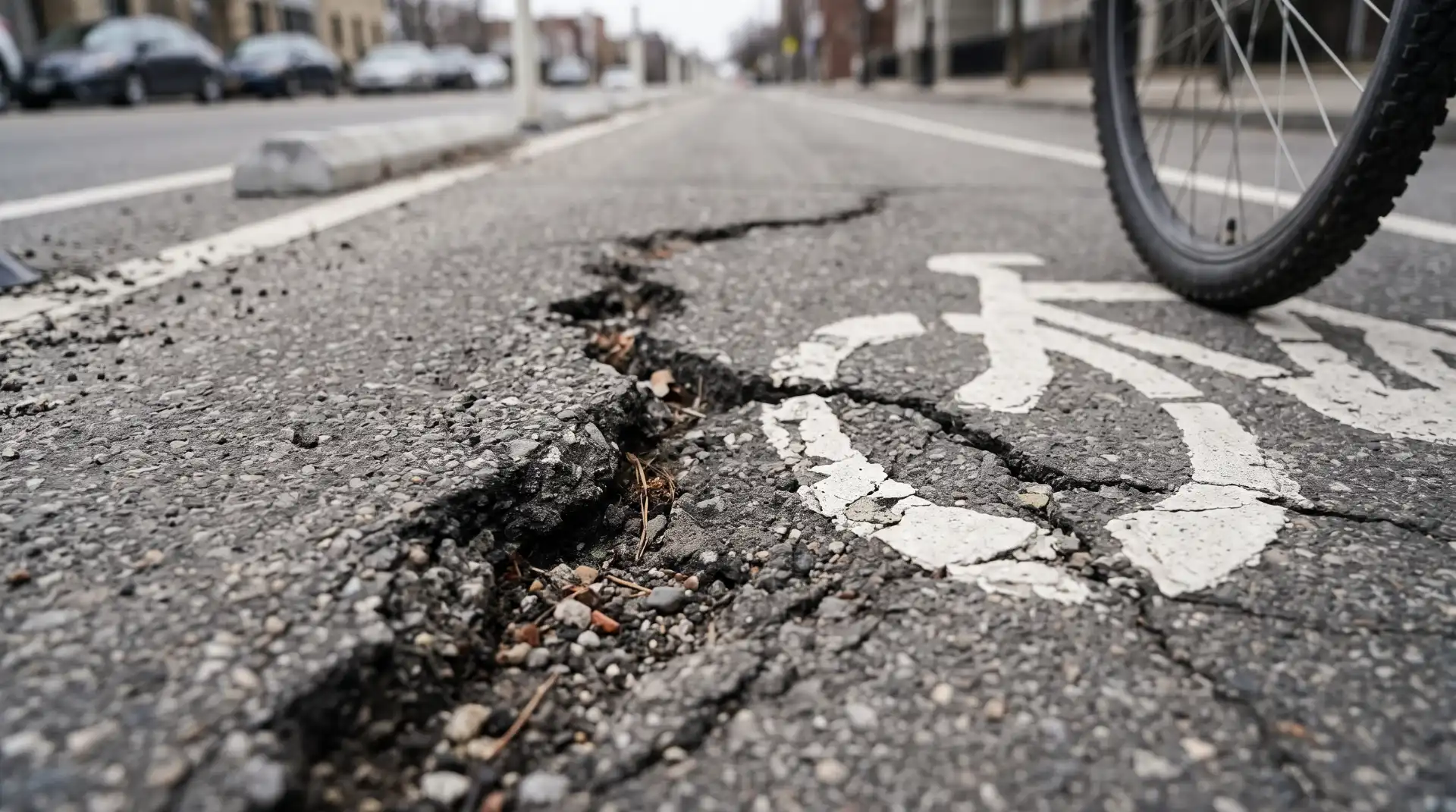
Bicycles respond differently to roadway hazards than passenger vehicles. A car can often pass over a small pavement defect without losing control, while a bicycle tire may become trapped in a crack or pothole. Loose gravel can cause a rider to slide, and a slippery metal cover can reduce traction during a turn.
The Federal Highway Administration identifies pavement defects, debris in bicycle lanes, dangerous drainage grates, blocked pathways, poor lighting, and gaps in bicycle infrastructure as potential safety problems. Its guide to creating safer communities for walking and biking discusses these and other infrastructure concerns.
FHWA
Whether a particular defect supports a lawsuit depends on its severity, the circumstances of the crash, the agency’s responsibility, and applicable law.
Potholes, Cracked Pavement, and Uneven Road Surfaces
Potholes are among the most recognizable hazards for cyclists. A deep or irregular hole can abruptly stop a front wheel, destabilize a rider, or force a cyclist to swerve into a motor vehicle lane.
Cracks, raised pavement edges, broken asphalt, sunken patches, and uneven transitions between road surfaces can create similar problems. The risk may be greater when a defect lies directly in a bicycle’s normal path or is difficult to see because of poor lighting, rainwater, leaves, or surrounding traffic.
A city may be responsible for maintaining the road where the defect exists, but the existence of a pothole alone does not establish liability. The cyclist may need evidence showing that the defect was sufficiently dangerous under the applicable legal standard and that the public entity had the necessary notice or other legally relevant knowledge.
Photographs showing the defect’s dimensions, location, and surrounding conditions can be valuable. Maintenance requests, prior complaints, inspection reports, and repair histories may also help establish how long the hazard existed.
Dangerous Drainage Grates and Utility Covers
Drainage grates can create serious risks when their openings are wide enough to catch a bicycle wheel, their surfaces are slippery, or their installation leaves an uneven edge in the roadway.
Utility covers can become dangerous when they sit above or below the surrounding pavement, shift out of position, break, or become slick in wet conditions. A cyclist approaching a turn may lose traction while crossing a metal cover.
Responsibility for these hazards can be complicated. A municipal department, utility company, contractor, or another entity may own or maintain the structure. More than one party could potentially have legal responsibility, depending on the facts.
An investigation should identify who installed the grate or cover, who was responsible for its upkeep, whether complaints had been made, and whether the defect violated applicable maintenance or design requirements.
Debris, Gravel, Leaves, and Standing Water
Bike lanes are often located near the edge of a road, where debris from vehicle traffic accumulates. Broken glass, loose gravel, discarded materials, leaves, and sand can make a bicycle lane difficult to navigate safely.
Standing water may conceal potholes, while accumulated leaves can hide cracks or create slippery surfaces. In colder regions, ice and snow may create additional hazards if responsible agencies fail to follow applicable maintenance requirements.
Not every temporary accumulation of debris creates legal liability. The relevant questions may include how long the condition existed, whether the agency had notice, what maintenance duties applied, and whether the hazard was reasonably preventable.
A recurring drainage problem may be particularly relevant if it repeatedly causes water to collect in the same location. Records showing prior complaints or repeated repairs could help demonstrate that the danger was not an isolated or unforeseeable event.
Poorly Designed or Abruptly Ending Bike Lanes
Some bicycle accidents result from more than a pothole or maintenance failure. Roadway design may also contribute to a dangerous situation.
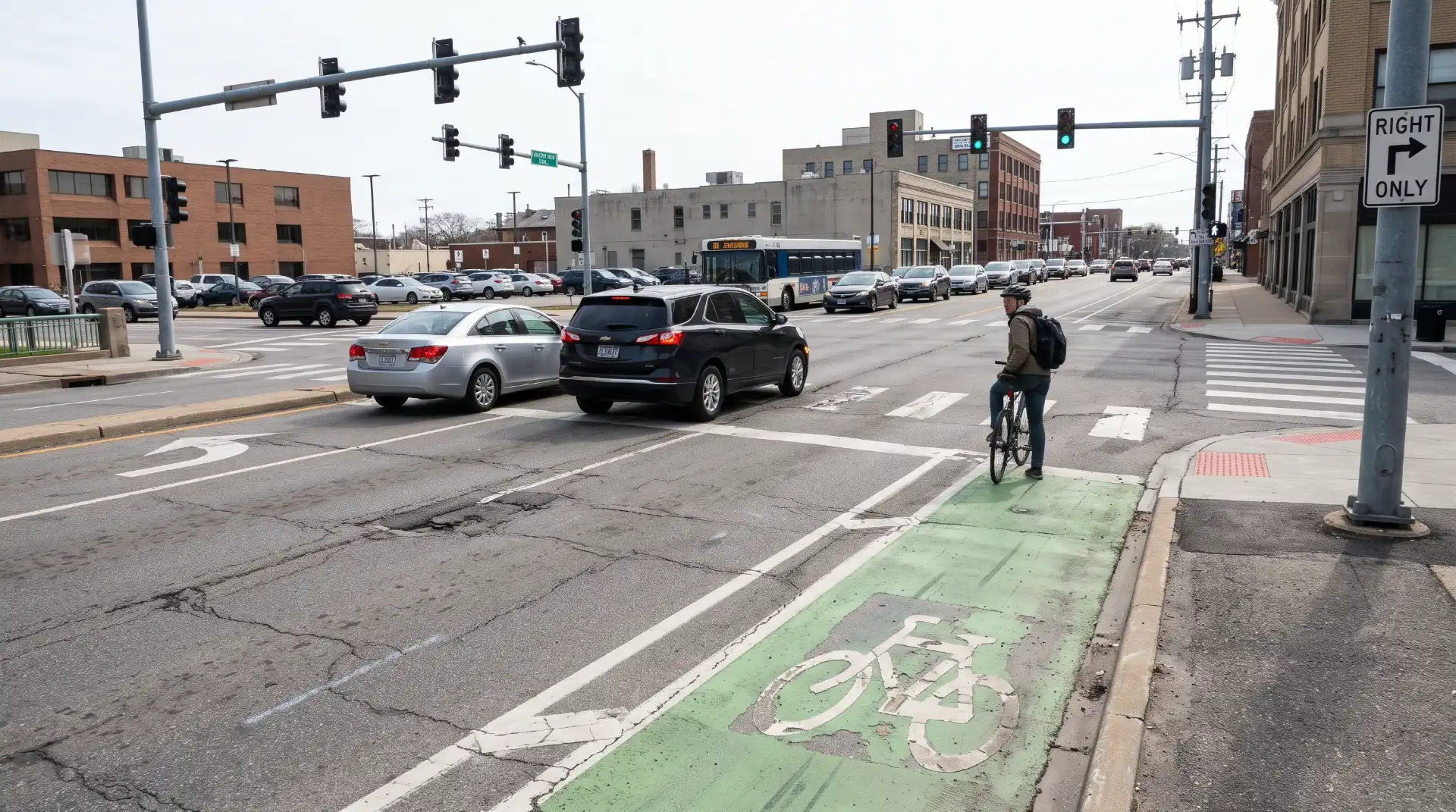
A bike lane might suddenly end near a busy intersection, direct riders into a narrow travel lane, disappear at a construction site, or place cyclists in conflict with turning vehicles. Faded markings, confusing lane transitions, inadequate signage, and insufficient separation from fast-moving traffic can increase the risk of collisions.
The Federal Highway Administration discusses the importance of continuous bicycle facilities, clear markings, suitable pavement, and safe transitions in its bicycle and pedestrian infrastructure guidance.
Nevertheless, a design that appears unsafe does not automatically create a valid lawsuit. Public agencies may have statutory protections for certain planning and design decisions. Other claims may depend on whether a specific dangerous condition existed, whether required warnings or safeguards were missing, and whether the agency had discretion or an enforceable duty under applicable law.
An engineer or roadway-safety expert may be needed to explain how the design contributed to the crash and whether feasible safety measures were available.
Unsafe Construction Zones and Missing Warning Signs
Road construction can change familiar cycling routes with little warning. Temporary barriers, exposed trenches, uneven pavement, loose construction materials, misplaced signs, and unexpected lane closures can create hazards.
A cyclist may enter a work zone and discover that the bike lane has been blocked without a safe alternative. To avoid a barrier, the rider may move into traffic and be struck by a vehicle. In another scenario, a poorly marked excavation could cause the cyclist to fall before reaching the work area.
Depending on the circumstances, potential defendants may include a city, a state transportation agency, a private construction company, a subcontractor, or another party responsible for traffic control.
Investigators should determine who controlled the construction site, who installed the temporary signs and barriers, whether an approved traffic-control plan existed, and whether the relevant parties followed their responsibilities.
Construction contracts and permits can help identify those involved, but the contract alone does not establish liability. The facts and applicable law must be examined carefully.
What Must You Prove to Sue a City for a Bicycle Accident?
A lawsuit against a public entity often involves requirements that differ from an ordinary negligence claim. Although the details vary by state, several recurring issues are important.
1. A Dangerous Condition Existed
The cyclist generally needs evidence that the roadway or bicycle facility was dangerous under the applicable legal standard.
This does not mean every crack, bump, or maintenance issue qualifies. Courts may consider the defect’s size, location, visibility, surrounding traffic, foreseeable use, and the risks it created for cyclists.
A shallow crack on a rarely traveled shoulder may be treated differently from a deep pothole in the middle of a heavily used bike lane. Similarly, an abrupt bike-lane termination at a busy intersection may require a different analysis from faded markings on a quiet residential street.
Photographs, measurements, inspection records, expert analysis, and witness statements can help establish the condition and its potential danger.
2. The Government Entity Had the Required Notice
Notice is often one of the most important issues in a dangerous-road claim.
Actual notice generally means that the responsible entity knew about the particular hazard. Evidence might include a complaint from a resident, a maintenance request, an inspection report, or a previous incident report describing the same defect.
Constructive notice generally concerns whether the entity should have discovered the hazard through reasonable inspection or maintenance under the governing legal standard. The length of time the defect existed, its visibility, and the agency’s inspection practices may be relevant.
Some jurisdictions have specific notice rules, exceptions, or alternative ways to establish liability. The precise requirements should be checked under the law that applies to the location.
For example, a cyclist may discover that several residents reported a large pothole weeks before a crash. Those complaints could be relevant to actual notice. By contrast, a newly created defect with no warning signs may make notice more difficult to prove.
A public entity’s failure to respond to a complaint is not automatically proof of liability, but records documenting prior knowledge can be important evidence.
3. The Agency Was Legally Responsible for the Condition
The government entity must have the kind of responsibility recognized by the applicable law. It may be necessary to establish ownership, control, maintenance obligations, or responsibility for a particular roadway feature.
This requirement can become complicated when multiple entities share responsibility. A county might own a road, a city might maintain a nearby sidewalk, and a utility company might control a drainage cover.
If the wrong entity receives the claim, the cyclist may face delays or procedural problems. Identifying all potentially responsible parties early can therefore be important.
4. The Dangerous Condition Caused the Accident
An injured cyclist must generally connect the dangerous condition to the injury.
Suppose a rider hits a pothole and falls, breaking a collarbone. Photographs, witness testimony, medical records, and the location of the bicycle damage may support the account.
But if the cyclist fell because a vehicle suddenly cut across the bike lane, the pothole may be unrelated. If both the road defect and the driver’s actions contributed to the crash, liability may need to be assessed among multiple parties.
Causation is not established merely by proving that a defect existed nearby. The evidence must support the conclusion that the condition was a legally relevant cause of the accident and resulting injuries.
5. The Cyclist Suffered Compensable Harm
A claim generally requires actual harm recognized by law. This may include medical expenses, lost income, pain and suffering, or other damages permitted by the jurisdiction.
Medical records can document fractures, head injuries, soft-tissue damage, rehabilitation needs, and future treatment recommendations. Employment records may establish missed work or reduced earning capacity.
Property damage can also matter. Bicycle repairs, replacement equipment, and other accident-related expenses should be documented.
The value and availability of damages depend on the facts, applicable law, available evidence, and any limits that apply to government claims.
Can You Sue a City Even If No Car Was Involved?
Yes. A bicycle accident does not have to involve a motor vehicle for a public entity to face potential liability.
A cyclist may be injured after striking a pothole, losing control on loose gravel, hitting an improperly installed drainage grate, or falling because a public bicycle path has a dangerous surface defect. If the responsible government entity’s conduct meets the applicable legal requirements, a claim may be possible even when no driver was involved.
This distinction matters because bicycle accident claims are often associated with collisions between cyclists and cars. However, road maintenance and infrastructure failures can cause serious injuries without any direct contact with another vehicle.
Consider a commuter traveling along a city-maintained bicycle path. A section of pavement has deteriorated, leaving a deep depression that collects water. The cyclist rides into the depression, loses control, and suffers a fractured wrist and damaged bicycle. No motorist is involved.
The cyclist may have a potential claim against the responsible public entity, depending on the agency’s duties, notice of the condition, causation, and any applicable immunities or defenses.
The rider would still need to establish the required elements of liability. The fact that an accident happened on public property does not automatically make the government responsible.
Can You Sue a City for Poorly Designed Bike Lanes?
Potentially, but claims involving roadway design can be more difficult than claims involving an obvious maintenance defect.
A bike lane may appear unsafe because it is too narrow for the surrounding traffic, ends abruptly, lacks adequate separation from moving vehicles, or creates a conflict between cyclists and turning motorists. In some cases, a design may expose cyclists to foreseeable hazards even when the pavement is well maintained.
However, governments often have special legal protections concerning planning decisions, engineering judgments, and discretionary design choices. These protections differ by jurisdiction and may depend on the type of claim and the decisions involved.
Design Defects Versus Maintenance Failures
It is useful to distinguish between a potentially dangerous original design and a condition that developed because of inadequate maintenance.
A design-related allegation might involve a bicycle lane that directs riders into a high-speed traffic lane without a safe transition. A maintenance-related allegation might involve a previously safe lane that becomes dangerous because its pavement breaks apart or its markings disappear.
The distinction is not always straightforward. A poorly designed drainage system might repeatedly create standing water, for example, while a damaged surface could become more dangerous because an agency failed to repair it.
Evidence may include original engineering plans, roadway inspection records, maintenance histories, traffic studies, construction documents, and expert opinions.
A qualified roadway engineer may be able to evaluate whether the road’s layout or condition contributed to the crash. The engineer’s findings can help explain the physical cause of the accident, although the ultimate legal determination depends on the applicable law and the evidence as a whole.
Does the City Have to Build a Bike Lane?
Generally, cyclists should not assume that the absence of a dedicated bicycle lane automatically gives rise to a lawsuit. Government agencies have considerable discretion over transportation planning, and legal requirements differ between jurisdictions.
A claim may be stronger when it involves an identifiable dangerous condition on an existing public facility rather than a general disagreement about whether a city should have installed a bike lane.
Even so, the circumstances matter. A missing warning sign, a dangerous road transition, or a defect associated with an existing bicycle facility may raise separate legal questions.
Cyclists who are concerned about an unsafe road can report the problem to the relevant transportation agency. Reports may encourage corrective action and create documentation of the hazard, although a complaint does not guarantee that a later claim will succeed.
What If a Driver and a Dangerous Road Both Contributed to the Crash?
Sometimes a bicycle accident involves more than one contributing factor. A driver may strike a cyclist while the rider is navigating a poorly maintained bike lane, or a cyclist may swerve around a road defect and enter a vehicle’s path.
In these cases, the driver and a public entity could potentially share responsibility, depending on the evidence and applicable law.
For example, imagine that a cyclist is riding in a designated bike lane when a large pothole forces the rider to move left. A motorist traveling beside the lane fails to leave sufficient clearance and strikes the cyclist.
An investigation might examine whether the driver acted negligently, whether the pothole created an unreasonable danger, whether the public entity had the legally required notice, and whether each party’s conduct contributed to the injuries.
The cyclist’s own actions may also be relevant. A rider who was distracted, traveling against traffic, or violating an applicable rule could face arguments about comparative fault.
How Comparative Negligence Can Affect a Claim
Many states use comparative negligence rules to allocate responsibility among parties. Depending on the jurisdiction, an injured person may recover damages reduced by their percentage of fault, or recovery may be restricted if their fault reaches a specified threshold.
A smaller number of jurisdictions follow contributory negligence rules that can impose much stricter limits on recovery.
The relevant law can also treat government claims differently from ordinary private-party claims.
For this reason, a cyclist should not assume that a possible mistake automatically eliminates a claim. The facts must be evaluated under the applicable rules.
A related article on your website, Bicycle Accidents on Shared Streets: Who Is Responsible When Traffic Rules Are Unclear?, explores how roadway conditions and the actions of different road users can affect bicycle accident liability.
Special Rules for Filing a Claim Against a City
One of the biggest differences between suing a government entity and suing a private person is the possibility of special claim procedures.
In many jurisdictions, an injured person cannot simply begin with an ordinary lawsuit. They may first have to submit a formal administrative claim to the responsible government entity within a specific period.
Missing the applicable deadline can seriously affect the right to recover compensation, even if the underlying accident appears to involve negligence.
Government Claim Deadlines May Be Shorter
The time limit for filing a claim against a public entity can differ substantially from the ordinary statute of limitations for personal injury cases.
Some jurisdictions impose administrative deadlines measured in months rather than years. Other jurisdictions use different procedures or provide exceptions in particular circumstances.
In California, for example, many claims for money or damages against local public entities are subject to the Government Claims Act. A claim for personal injury generally must be presented within six months of accrual, subject to statutory rules and exceptions. The deadline and procedure applicable to a particular claim should be confirmed promptly.
After a claim is presented, additional deadlines may apply depending on the agency’s response and the governing law. A rejected claim, a claim that is not acted upon, and a claim involving a different type of defendant can raise different procedural issues.
Do not assume that the standard deadline for filing a personal injury lawsuit applies to a city claim. Nor should you assume that sending an email, submitting a general maintenance complaint, or reporting the crash to police satisfies a formal government claim requirement.
What Information Should a Government Claim Include?
The required contents depend on the jurisdiction and the form used by the relevant public entity. Commonly requested information includes the claimant’s identity and contact information, the date and location of the incident, a description of the circumstances, the injuries or losses involved, and information identifying the responsible agency.
Supporting documentation may include photographs, medical records, witness information, and repair estimates. However, an injured cyclist should check the official requirements rather than assume that every type of evidence must be attached at the initial stage.
It is important to describe the incident accurately. If the cyclist does not know whether the city, county, or another agency controlled the road, that uncertainty should be investigated rather than resolved by guessing.
An attorney familiar with public entity claims can help identify the correct procedure, evaluate the applicable deadline, and determine whether more than one party should receive notice.
What Happens After the Claim Is Submitted?
The government entity may investigate, request additional information, reject the claim, offer a settlement, or take another action permitted by law.
The process can involve reviewing maintenance records, consulting engineers, examining photographs, interviewing witnesses, and evaluating the claimant’s medical expenses.
If a claim is rejected, the injured person may have a limited period to initiate litigation. The precise deadline depends on the governing statute and procedural circumstances.
A submitted claim does not guarantee a settlement, and a denial does not necessarily mean that the underlying allegations are unfounded. The next step depends on the facts, the applicable deadlines, and the available legal options.
What Evidence Can Strengthen a Dangerous Road Bicycle Accident Claim?
Evidence can be especially important in cases involving government agencies because the condition of the road may change quickly after an accident. A pothole may be repaired, debris may be cleared, and temporary barriers may be moved before the cyclist has an opportunity to document the scene.
Preserving reliable information early can make it easier to reconstruct what happened.
Photograph the Road Hazard
If it is safe to do so, take photographs of the exact location where the accident occurred. Capture the defect from multiple angles and include wider views showing the bicycle lane, nearby traffic, intersections, signs, and surrounding road layout.
Close-up photographs can show the nature of a crack, pothole, broken grate, or damaged pavement. Wider photographs can demonstrate where the defect sits in relation to the normal cycling path.
A ruler or another object of known size may help illustrate the dimensions of a defect, but do not enter traffic or place yourself at risk to obtain measurements.
If the road is wet, poorly lit, or obstructed by vegetation, document those conditions where possible. Preserve the original files and their timestamps rather than relying exclusively on edited images or social media uploads.
Obtain Witness Statements and Incident Reports
Witnesses may have seen the cyclist strike the hazard, observed the road condition before the accident, or heard previous complaints about the same location.
Collect names and contact details where possible. Ask witnesses to describe what they personally observed rather than encouraging them to speculate about legal responsibility.
If police or emergency responders attended the accident, obtain the incident or collision report when available. Such reports may document the location, the condition of the scene, and statements from people involved.
A police report is not necessarily a final determination of liability, but it can provide a useful starting point for an investigation.
For a practical overview of immediate post-crash steps, see What to Do After a Bicycle Accident: A Step-by-Step Legal Guide.
Look for Previous Complaints and Maintenance Records
Evidence that the hazard existed before the accident can be particularly valuable when notice is an issue.
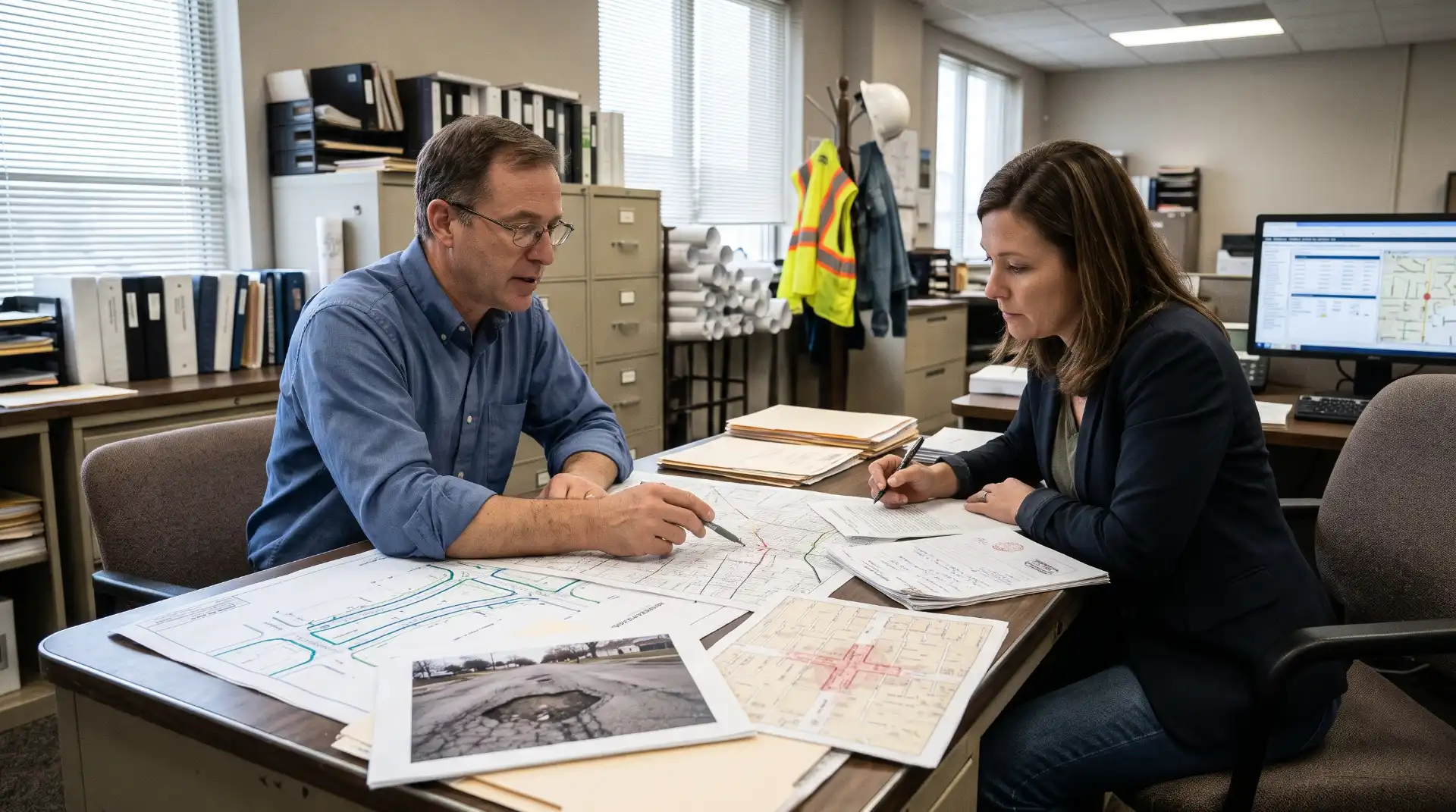
Potential records include maintenance requests, road inspection logs, repair orders, photographs taken during earlier inspections, public complaints, and reports of previous incidents at the same location.
Some of these records may be available through a public records request under the relevant state law. Access rules, exemptions, and processing times vary.
A request may identify when a defect was first reported, whether the agency inspected the location, and what corrective action was considered or completed. The absence of a record does not necessarily establish that the agency lacked notice, but records can help clarify the timeline.
Where a public agency or contractor may possess important evidence, an attorney may also consider appropriate legal steps to preserve records, video footage, or other information before it is lost.
Preserve Medical and Financial Documentation
Medical records can establish the nature and severity of injuries and help connect treatment to the accident. Keep discharge instructions, imaging reports, physician recommendations, rehabilitation records, medication expenses, and documentation of any future treatment needs.
Cyclists should also preserve receipts for bicycle repairs, replacement equipment, transportation to medical appointments, and other reasonable accident-related expenses.
If injuries prevent someone from working, pay records, employer statements, and other documentation may help establish lost income. For a long-term injury, evidence about reduced earning capacity may also become relevant.
Your site’s article on Understanding Bicycle Accident Laws: Your Rights and Legal Options provides additional background on injury documentation and legal considerations after a crash.
What Compensation Can You Recover After a Bicycle Accident Caused by a Dangerous Road?
When a valid claim is established, compensation may cover several categories of loss. The available damages depend on the applicable law, the severity of the injuries, the evidence, and any special restrictions governing claims against public entities.
Medical Expenses and Future Treatment
Medical expenses can include emergency care, hospital treatment, surgery, diagnostic testing, medication, physical therapy, and rehabilitation.
Some cyclists recover quickly, while others require months of treatment or face permanent limitations. If a doctor determines that further treatment is reasonably necessary, projected future medical costs may be relevant to the claim.
Medical documentation should distinguish accident-related treatment from unrelated conditions. This can be particularly important when symptoms appear gradually or an injury aggravates a preexisting condition.
Lost Wages and Reduced Earning Capacity
A serious bicycle accident may prevent an injured person from returning to work immediately. Lost income may include wages, salary, or other earnings that can be established under applicable law.
If an injury causes lasting physical limitations that affect the person’s ability to perform their job, reduced future earning capacity may also be considered.
The relevant evidence may include employer records, tax documents, medical restrictions, and vocational or economic assessments.
Pain, Suffering, and Other Losses
Where permitted, non-economic damages may compensate for physical pain, emotional distress, loss of normal activities, and the broader impact of an injury on daily life.
A cyclist who once commuted independently may need assistance with routine tasks during recovery. Another rider may experience lasting limitations that affect exercise, family responsibilities, or recreational activities.
These consequences can be relevant to damages, but they should be documented honestly and supported by the available evidence.
Bicycle Damage and Other Property Losses
Compensation may also include reasonable costs to repair or replace a damaged bicycle, helmet, cycling computer, clothing, and other equipment when the law permits recovery.
Preserve photographs, repair estimates, purchase records, and receipts. Avoid discarding damaged equipment before documenting it, particularly when the equipment’s condition may help explain how the crash occurred.
Are There Limits on Damages Against Government Entities?
Potentially. Some jurisdictions impose special limits on certain damages or restrict particular categories of recovery against public entities. Other rules may affect attorney fees, interest, or available remedies.
The limits applicable to a city claim may differ from those that apply to a private driver or company. An injured cyclist should therefore avoid relying on general personal injury settlement examples to estimate the value of a government-liability case.
A realistic assessment should account for the strength of the evidence, the severity of the injuries, the responsible parties, the applicable legal restrictions, and the possibility of comparative fault.
Can You Sue a City If the Dangerous Road Was Reported but Never Repaired?
Previous complaints can be important evidence, but they do not automatically establish that a city is liable for a later bicycle accident.
A claim may become stronger when records show that the responsible agency received a detailed report about a serious hazard and had an opportunity to address it before the crash. For example, residents may have submitted photographs of a deteriorating bike lane, or maintenance crews may have documented a dangerous pothole during an earlier inspection.
The significance of those records depends on several factors. The agency must have the type of responsibility required by law, the condition must satisfy the applicable legal standard, and the evidence must connect the hazard to the cyclist’s injuries. Some jurisdictions also have specific requirements concerning how an agency receives notice or how long a dangerous condition must exist.
The agency may argue that it did not receive adequate notice, that the defect was not sufficiently dangerous, that it lacked a reasonable opportunity to respond, or that the cyclist’s actions contributed to the crash.
A previous repair may also complicate the analysis. If the agency attempted to fix the defect but the repair failed, investigators may need to examine the quality of the work, the timing of inspections, and whether the same hazard reappeared.
Cyclists should not assume that a complaint made by another person will automatically establish the legal requirements for their own claim. Nevertheless, prior complaints, inspection records, and documented incidents can provide a valuable timeline for investigating the road’s condition.
What If a City Repairs the Road Immediately After the Accident?
A public agency may repair a pothole, replace a damaged grate, or remove debris shortly after a bicycle accident. That does not necessarily eliminate the possibility of a claim.
The repair may improve safety for future cyclists, but it can also make it harder to document the precise condition that existed when the accident occurred. For this reason, photographs, witness accounts, incident reports, and records created before the repair can be especially useful.
If the cyclist did not photograph the hazard, other evidence may still help. Nearby residents may have taken pictures, a business camera may have captured the location, or an earlier maintenance request may describe the defect.
The timing of the repair can also be relevant to the investigation, but it should not be treated as automatic proof that the agency admitted fault. Public agencies may repair infrastructure as a routine safety measure without conceding that a legal duty was breached.
In some cases, evidence concerning subsequent repairs or remedial measures may be subject to special evidentiary rules. An attorney can evaluate what information may lawfully be obtained and used in the particular case.
The most important point is to preserve evidence of the original condition as early as possible rather than waiting until a claim is formally filed.
What Should You Do Immediately After a Bicycle Accident Caused by a Road Hazard?
The actions taken in the hours and days after a crash can affect both recovery and the ability to investigate the incident. Medical care should come first, particularly when the cyclist has a head injury, severe pain, suspected fractures, confusion, or other concerning symptoms.
Once immediate safety needs have been addressed, several practical steps may help protect a potential claim.
Seek Medical Attention
Do not assume that an injury is minor because you can stand up or walk away from the accident. Head injuries, fractures, and soft-tissue damage may not be immediately obvious.
Tell medical professionals how the accident happened and describe the symptoms you are experiencing. Follow their treatment recommendations and keep records of appointments, prescriptions, and restrictions.
Prompt medical documentation can help establish the nature of the injury and its relationship to the crash. Delaying care can also allow an injury to worsen.
Report the Hazard and Accident
Notify the appropriate local authority about the road condition. Depending on the location, this may be the city’s public works department, a county road department, or a state transportation agency.
Provide the exact location and a factual description of the problem. If there is an immediate danger to other road users, report it through the appropriate emergency or urgent hazard-reporting channel.
Keep a copy of the complaint, the submission date, any confirmation number, and any response received. Remember that a routine maintenance report is not necessarily a substitute for a formal claim against a government entity.
Preserve Evidence and Avoid Premature Statements
Keep the damaged bicycle and equipment, preserve photographs, and save the contact information of witnesses. If nearby cameras may have recorded the incident, identify their locations promptly because recordings may be overwritten.
Avoid guessing about the cause of the crash when speaking with an insurer or government representative. Provide accurate information, but do not feel compelled to make unsupported conclusions about fault.
Do not sign a settlement or release without understanding its effect on your rights. A quick payment may not account for future treatment or lasting disability.
Check the Government Claim Deadline Promptly
This step is particularly important when a city, county, state agency, or public transportation authority may be responsible.
Identify the potential defendants and determine whether a formal claim must be presented before a lawsuit can proceed. If you are uncertain about the correct agency or deadline, seek legal guidance promptly rather than waiting for the investigation to finish.
A strong claim can be harmed by a missed procedural deadline, and the rules may differ from those that apply to an ordinary collision with a private driver.
How a Bicycle Accident Attorney Can Help With a Government Liability Claim
Claims involving dangerous roads and bike lanes can require a more detailed investigation than a typical bicycle accident claim. An attorney experienced in public entity liability can help identify the responsible agency, evaluate applicable notice requirements, and determine what evidence is needed to establish the claim.
The investigation may involve reviewing photographs, maintenance histories, engineering plans, inspection records, witness statements, and medical documentation. When the roadway’s physical condition or design is disputed, the attorney may consult a qualified engineer or accident reconstruction professional.
Legal counsel can also assess whether a private contractor, utility company, property owner, or negligent driver may share responsibility. Identifying all potential defendants can be important when more than one party contributed to the crash.
Another important role is managing deadlines. A lawyer can review the applicable administrative claim procedure, help prepare the necessary documentation, and determine what options may remain if a claim is rejected.
Not every bicycle accident requires an attorney. However, professional advice may be particularly valuable when injuries are serious, government property is involved, several parties may be responsible, or the agency disputes that a dangerous condition existed.
Before hiring a lawyer, ask about their experience with public entity claims, roadway defect cases, bicycle accidents, and the procedural requirements in the relevant jurisdiction.
Frequently Asked Questions About Bicycle Accidents Caused by Dangerous Roads
Can I sue my city if I hit a pothole while riding my bicycle?
Possibly. A claim may be available if the pothole qualified as a dangerous condition, the city had the legally required responsibility and notice, and the defect caused compensable injuries. The rules vary by jurisdiction, and the presence of a pothole alone does not establish liability.
Can I sue for a bicycle accident caused by a poorly maintained bike lane?
Yes, potentially. Dangerous pavement, debris, drainage problems, damaged markings, and other hazards may support a claim if the applicable legal requirements are satisfied. It is important to identify who maintained the lane and whether a government entity or another party was responsible.
How long do I have to sue a city after a bicycle accident?
There is no single deadline for every city in the United States. Some jurisdictions require an administrative claim within a short period before a lawsuit can proceed. In California, many personal injury claims against local public entities generally require a claim to be presented within six months of accrual, subject to applicable rules and exceptions. Confirm the deadline for your particular claim promptly.
What if the city says it did not know about the dangerous road?
The agency’s lack of actual knowledge does not necessarily resolve the issue. Depending on the jurisdiction, constructive notice or another legal basis may be relevant. Inspection records, the duration of the defect, prior incidents, and the agency’s maintenance practices may help establish what it knew or should have discovered.
Can I sue a city if I was partly responsible for the accident?
Possibly. The effect of a cyclist’s own conduct depends on the jurisdiction’s negligence rules and the facts. In many states, comparative negligence can reduce compensation according to the injured person’s share of responsibility. Other jurisdictions impose stricter limits.
Can I sue both a city and a construction company?
Potentially. If a dangerous construction zone contributed to the crash, the city and one or more contractors may need to be investigated. Their legal responsibilities depend on control of the work site, the contract, the applicable duties, and any government-liability protections. A contractor’s involvement does not automatically make either party liable.
What if I was riding an electric bicycle when I crashed?
The same general questions about roadway conditions, notice, causation, and government liability may apply. However, additional issues could arise depending on the e-bike’s classification, local riding rules, and the circumstances of the accident. The fact that the cyclist was using an electric bicycle does not automatically eliminate a potential roadway claim.
Do I need a police report to sue a city?
A police report may help document the incident, but its absence does not automatically determine whether a claim is valid. Other evidence, including photographs, witness statements, medical records, and maintenance documents, may be relevant. Formal government claim requirements must still be checked separately.
What if I did not take pictures of the road hazard?
You may still be able to pursue a claim. Witnesses, nearby surveillance footage, earlier complaints, inspection records, and photographs taken by other people may help establish the condition. Act promptly because some evidence may disappear or become more difficult to obtain over time.
Protecting Your Rights After a Bicycle Accident Caused by a Dangerous Road
A dangerous road or poorly maintained bike lane can cause serious injuries even when no motor vehicle is involved. Potholes, broken pavement, unsafe drainage grates, construction hazards, and confusing roadway layouts can all contribute to bicycle crashes.
In appropriate circumstances, an injured cyclist may be able to pursue compensation from the government entity responsible for the dangerous condition. However, liability depends on more than proving that the road was imperfect. The cyclist must evaluate the agency’s responsibilities, the condition’s legal significance, notice requirements, causation, available damages, and any applicable immunity rules.
The steps taken after the accident can make a meaningful difference. Seek medical care, document the road hazard, preserve witness information, keep financial and medical records, and identify the agency responsible for the location. Most importantly, investigate government claim deadlines early.
If you were injured because of a dangerous public road or bike lane, consider obtaining advice from an attorney familiar with bicycle accident and government liability claims in your state. A timely investigation can help clarify who may be responsible and what legal options are available.
Safe cycling depends on more than careful riders. It also depends on roadways and bicycle facilities that are maintained and managed with the safety of all road users in mind.