Bicycle Accidents on Shared Streets: Who Is Responsible When Traffic Rules Are Unclear?
Bicycle accidents on shared streets can be especially complicated because bicycles and motor vehicles are often expected to occupy the same roadway while following different operating characteristics. A cyclist may be traveling in a legally permitted portion of the road, while a motorist may be preparing to turn, merge, pass, or cross the cyclist’s path. When traffic signs, lane markings, roadway design, or right-of-way instructions are unclear, determining who is responsible for a resulting collision can become difficult.
Shared streets are common throughout the United States. Some are ordinary neighborhood roads where bicycles and cars travel in the same lanes. Others may have bicycle markings, traffic-calming features, bicycle route signs, shared-lane markings, parking areas, or other treatments intended to accommodate multiple types of road users. The design can change from one block to the next, creating situations where cyclists and drivers must make quick decisions about positioning and movement.
When a crash occurs, responsibility generally depends on the facts and the applicable state law. The mere fact that a cyclist and motorist were sharing the same street does not automatically make either party responsible. Investigators may need to examine traffic signals, signs, lane markings, vehicle speed, bicycle position, visibility, turning movements, witness statements, roadway conditions, and available video evidence.
The National Highway Traffic Safety Administration explains that bicyclists riding on roadways generally have the same rights and responsibilities as motorists, although specific laws vary by jurisdiction. NHTSA also advises motorists and bicyclists to remain alert, follow traffic rules, and safely share the roadway. (NHTSA Bicycle Safety)
For an injured cyclist, understanding how these factors can affect a bicycle accident claim may make it easier to recognize what evidence should be preserved after a crash.
What Is a Shared Street?
A shared street is a roadway used by multiple types of travelers, including bicyclists and motor vehicles. The term can describe a wide range of road designs. Some shared streets are conventional roads without dedicated bicycle lanes. Others are designed specifically to encourage bicycles and vehicles to coexist through traffic-calming measures, lower speeds, pavement markings, signs, or modified intersections.
The Federal Highway Administration has recognized shared roadways as facilities where bicycles and motor vehicles operate together. Depending on the location, these roadways may include ordinary streets, bicycle routes, wider curb lanes, paved shoulders, or bicycle boulevards.
The important point is that the presence or absence of a dedicated bicycle lane does not, by itself, determine who has the right to use a roadway. A cyclist may have a legal right to use a street even when there is no painted bicycle lane.
However, the cyclist must still follow applicable traffic laws. The same is true for motorists.
This creates a legal framework in which both parties may have responsibilities. A driver must exercise reasonable care around a cyclist, while a cyclist generally must comply with applicable traffic signals, signs, right-of-way rules, and other requirements.
When an accident occurs, the investigation therefore needs to focus on what each person was doing immediately before the collision.
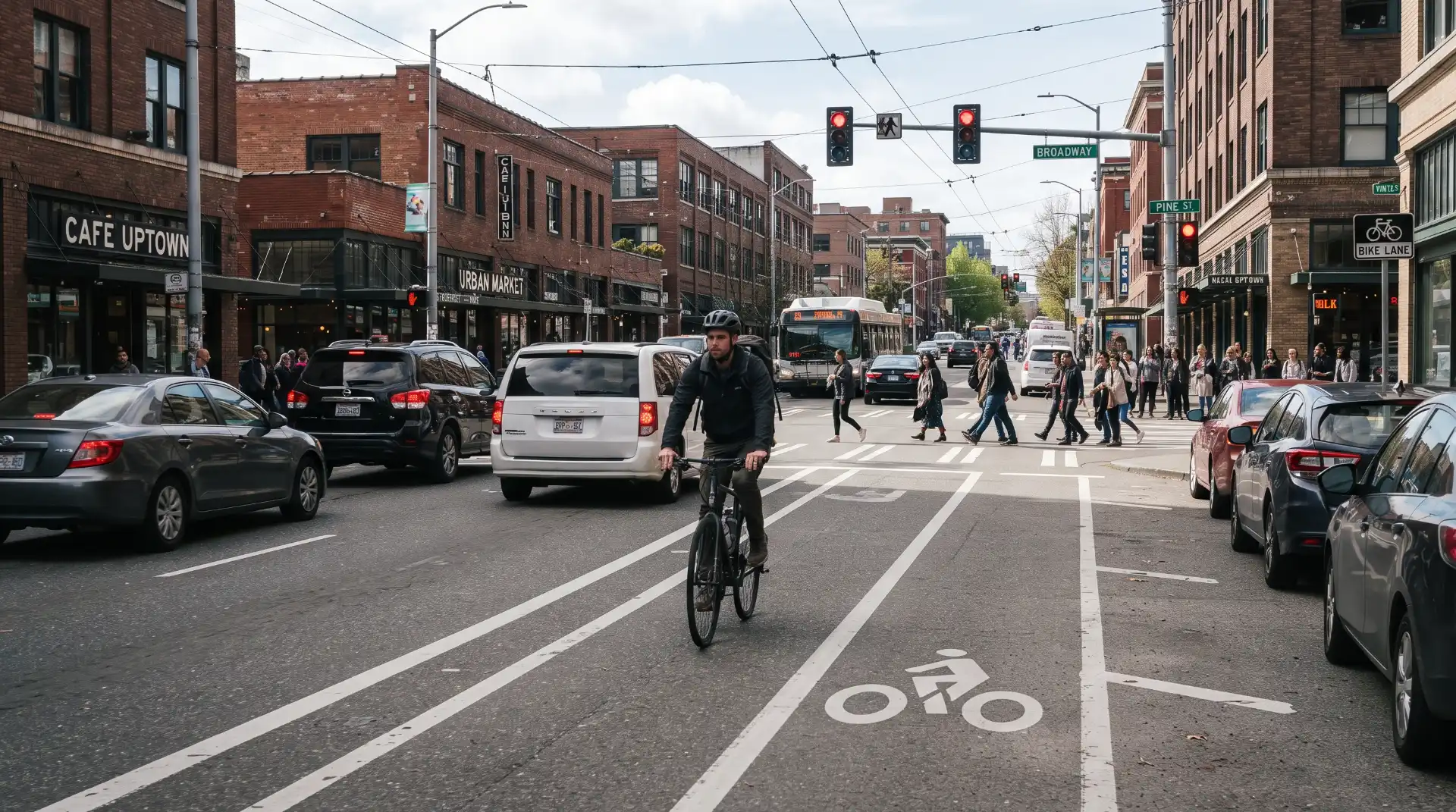
Why Shared Streets Can Create Confusion
One reason bicycle accidents occur on shared streets is that the roadway may not clearly communicate how different users are expected to interact.
A cyclist may be traveling straight through an intersection while a vehicle approaches from behind. The driver may intend to turn right across the cyclist’s path. If the lane markings do not clearly indicate the expected movement, both road users may interpret the situation differently.
A similar problem can occur when a bicycle lane ends unexpectedly.
The cyclist may have to merge into the general traffic lane, while vehicles may continue traveling at a higher speed. If the transition occurs near an intersection or parked vehicles, the cyclist may have limited space to maneuver.
Road construction can make these conditions even more complicated. Temporary barriers, cones, signs, lane closures, and detours may change the normal traffic pattern.
A collision in one of these locations requires more than simply determining where the bicycle and vehicle ended up. The investigation may need to determine whether the roadway configuration itself contributed to the misunderstanding.
Traffic Laws Still Apply on Shared Streets
Shared streets do not mean that normal traffic rules disappear.
Bicyclists generally must obey traffic signals, stop signs, yield signs, and other applicable traffic controls. Motorists must also obey those controls and exercise appropriate care when interacting with cyclists.
For example, if a cyclist has a stop sign and enters an intersection without stopping, that conduct could become relevant to a later accident. Likewise, if a driver has a stop sign but proceeds through the intersection without yielding, the driver’s conduct could become central to the claim.
The exact rules depend on state and local law.
That distinction is important because bicycle laws are not identical throughout the country. A rule applicable in California may not be identical to a rule in Florida, New York, Texas, Washington, or another state.
An attorney evaluating a bicycle accident claim generally needs to identify the law governing the specific roadway and location where the crash occurred.
Who Has the Right of Way?
Right-of-way questions are often central to bicycle accident investigations.
Consider a cyclist traveling straight through an intersection while a motorist is preparing to make a turn. Depending on the traffic controls and applicable law, the driver may need to yield to the cyclist before completing the turn.
A driver who turns without adequately checking for a cyclist may cause a serious collision.
However, the cyclist’s actions may also need to be examined. If the cyclist entered the intersection against a traffic signal or otherwise violated an applicable rule, that conduct could affect the legal analysis.
This is why right-of-way cases should not be reduced to statements such as “the bicycle always has the right of way” or “cars always have priority.”
Neither assumption is universally correct.
The correct analysis depends on the traffic controls, roadway configuration, movements of the parties, and applicable law.
Driver Negligence Can Cause Shared-Street Bicycle Crashes
Drivers can contribute to bicycle accidents in numerous ways.
One common example is failing to yield while turning. A driver may focus on approaching motor vehicles and fail to notice a cyclist traveling alongside the vehicle.
Distracted driving is another potential factor. Looking at a phone, adjusting a navigation system, reaching for an object, or engaging in another distracting activity can reduce a driver’s ability to recognize a cyclist.
Speed can also matter. A driver traveling too quickly may have less time to respond when a cyclist enters the driver’s path.
Unsafe passing is another concern. A motorist may attempt to pass a bicycle without leaving sufficient space or without considering approaching traffic.
NHTSA specifically advises motorists to give bicyclists room, check for cyclists before turning or opening doors, and remain alert to bicycles that may be difficult to see. (NHTSA Bicycle Safety)
The fact that a roadway is shared does not eliminate the driver’s obligation to operate safely.
Cyclists Can Also Be Accused of Negligence
A bicycle accident claim can also involve allegations that the cyclist contributed to the collision.
An insurer may argue that the cyclist failed to obey a traffic signal, failed to yield, rode against traffic, made an unsafe lane movement, failed to use required lighting, or otherwise violated an applicable rule.
The validity of such an allegation depends on the evidence and the law governing the accident.
Even if a cyclist made a mistake, that does not necessarily mean the motorist is automatically free of responsibility. A collision can involve negligence by more than one person.
For example, suppose a cyclist makes an improper lane movement, but a motorist is simultaneously traveling too fast and fails to keep a reasonable lookout. Depending on the state’s negligence rules and the evidence, responsibility may be divided.
This is one reason injured cyclists should avoid assuming that a traffic citation or accusation by an insurance company automatically determines the outcome of a civil claim.
How Comparative Fault May Affect a Bicycle Accident Claim
Many states use some form of comparative-fault system. Under these systems, an injured person’s own conduct can potentially affect the amount of compensation available.
The exact rules vary.
In some jurisdictions, damages may be reduced according to the injured person’s percentage of responsibility. Other states use different thresholds or approaches.
For example, if evidence shows that both a driver and cyclist contributed to a collision, the parties’ respective percentages of fault may become an issue.
The calculation can become especially important in cases involving significant medical expenses and long-term injuries.
Because comparative-fault laws differ between states, cyclists should avoid relying on general assumptions. A legal rule that applies in one jurisdiction may not apply in another.
Your site’s resource on bicycle accident laws can provide readers with additional background about legal rights and potential claims:
Understanding Bicycle Accident Laws: Your Rights and Legal Options
When Road Design May Contribute to a Crash
Not every bicycle accident on a shared street is caused exclusively by a driver or cyclist.
Sometimes the physical roadway environment may contribute to the collision.
A road may have faded bicycle markings, confusing lane transitions, poor sight distance, inadequate signs, damaged pavement, improperly placed barriers, or other conditions that make bicycle and vehicle movements more difficult to understand.
The Federal Highway Administration has recognized the importance of roadway design and conditions in bicycle transportation and safety. Its guidance discusses factors such as roadway width, pavement condition, drainage, traffic characteristics, and bicycle accommodation. (Federal Highway Administration)
However, proving that a roadway condition creates legal liability is a separate question.
A city, county, state, transportation agency, or contractor is not automatically liable merely because an accident occurred on a poorly designed road.
A claim involving a public entity may require evidence concerning ownership or control of the roadway, notice of the condition, applicable government-claim procedures, immunity rules, maintenance responsibilities, and other legal requirements.
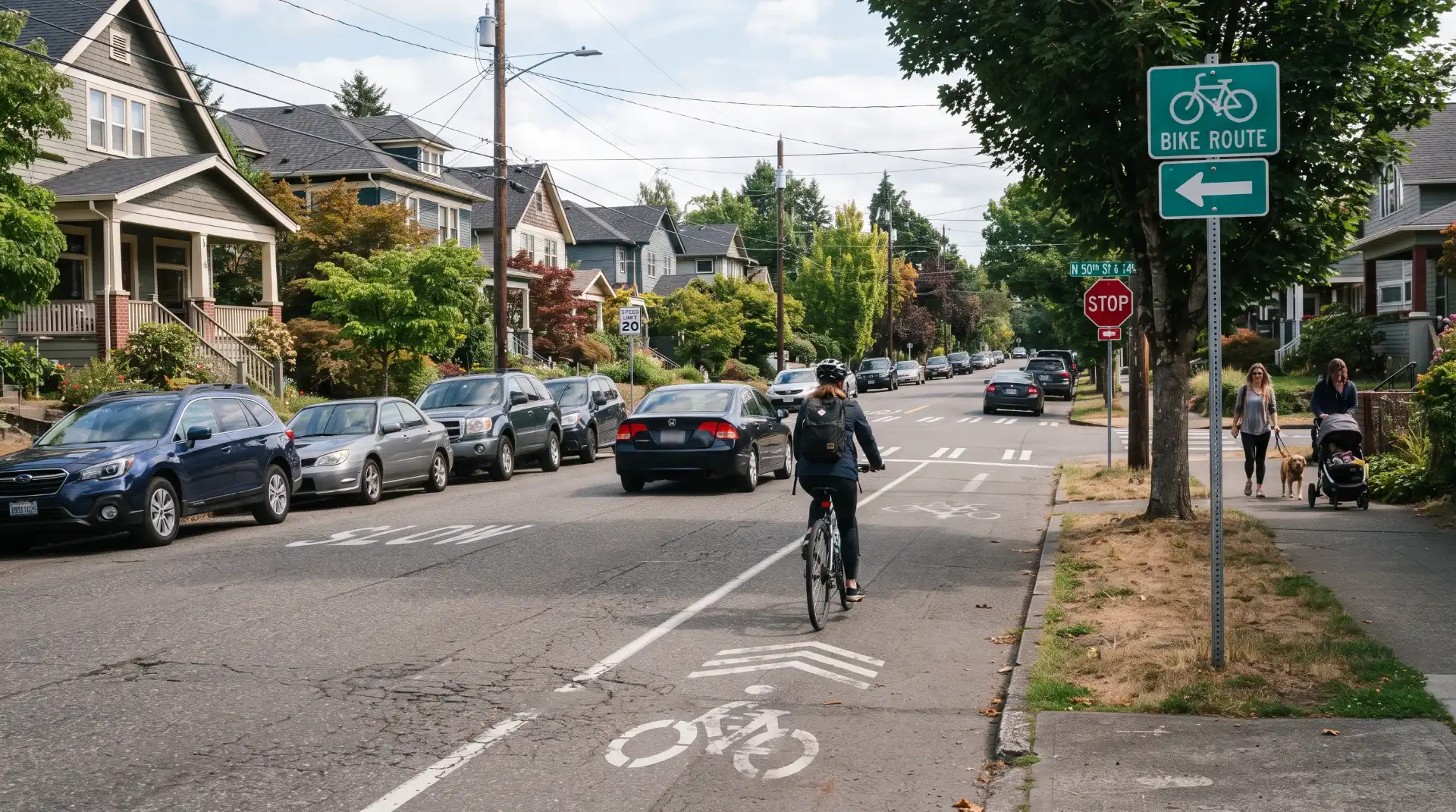
Faded Lane Markings Can Become Important Evidence
Lane markings help road users understand where they are expected to travel.
A faded bicycle symbol or nearly invisible lane line may make an already complicated roadway harder to navigate.
Suppose a bicycle lane is heavily worn and difficult to see. A driver approaches the area and does not recognize that cyclists are expected to travel there. A cyclist continues along the roadway and is struck by the vehicle.
The faded marking does not automatically establish driver or government liability.
However, it could become relevant evidence when investigators reconstruct the crash.
Photographs taken after the accident can document the condition of the markings. Historical photographs, roadway-maintenance records, traffic studies, and witness testimony may provide additional information.
The key issue is whether the condition contributed to the accident and whether a legally responsible party can be identified.
Sudden Bicycle Lane Endings Can Create Conflict
Bicycle lanes that abruptly end can create merging situations.
A cyclist who has been traveling in a designated bicycle lane may suddenly need to move into the adjacent vehicle lane.
This can be particularly challenging when the transition occurs close to an intersection.
The cyclist may need to look behind for approaching traffic, signal the movement, and identify a safe opening. At the same time, drivers may be approaching from behind and may not anticipate that the cyclist needs to merge.
If a collision occurs, investigators may examine several questions.
Where did the bicycle lane end? Was there advance signage? Was the cyclist signaling? How fast was the vehicle traveling? Was the driver following too closely? Was there enough space for the cyclist to merge safely? Were parked vehicles or other obstacles blocking visibility?
The answer to these questions may provide a more complete picture of what caused the crash.
Construction Zones Can Change the Normal Roadway
Construction zones deserve special attention because they can temporarily alter a roadway.
A cyclist may normally travel along a particular section of pavement, but construction could close the bicycle lane or force the rider into a vehicle lane.
Temporary signs and barriers may instruct traffic to follow a different route.
If a construction area is poorly marked or maintained, cyclists may have difficulty determining where they are supposed to travel.
A crash in a construction zone may therefore involve the actions of a driver or cyclist as well as questions about the construction setup.
Photographs of cones, barriers, temporary signs, pavement conditions, and lane closures can become valuable.
The identity of the contractor and entity responsible for the roadway may also need to be established.
What If a Traffic Sign Is Obstructed?
Traffic signs are intended to communicate important instructions.
A stop sign hidden behind vegetation, construction equipment, a parked vehicle, or another obstruction may be difficult for a road user to see.
An obstructed sign does not automatically excuse a traffic violation, and liability depends on the circumstances.
Nevertheless, the obstruction may be relevant to understanding why a collision occurred.
Photographs showing the driver’s or cyclist’s approach to the sign can be particularly helpful because the relevant question may be what the road user could reasonably see before entering the intersection.
Large Vehicles Can Create Additional Visibility Issues
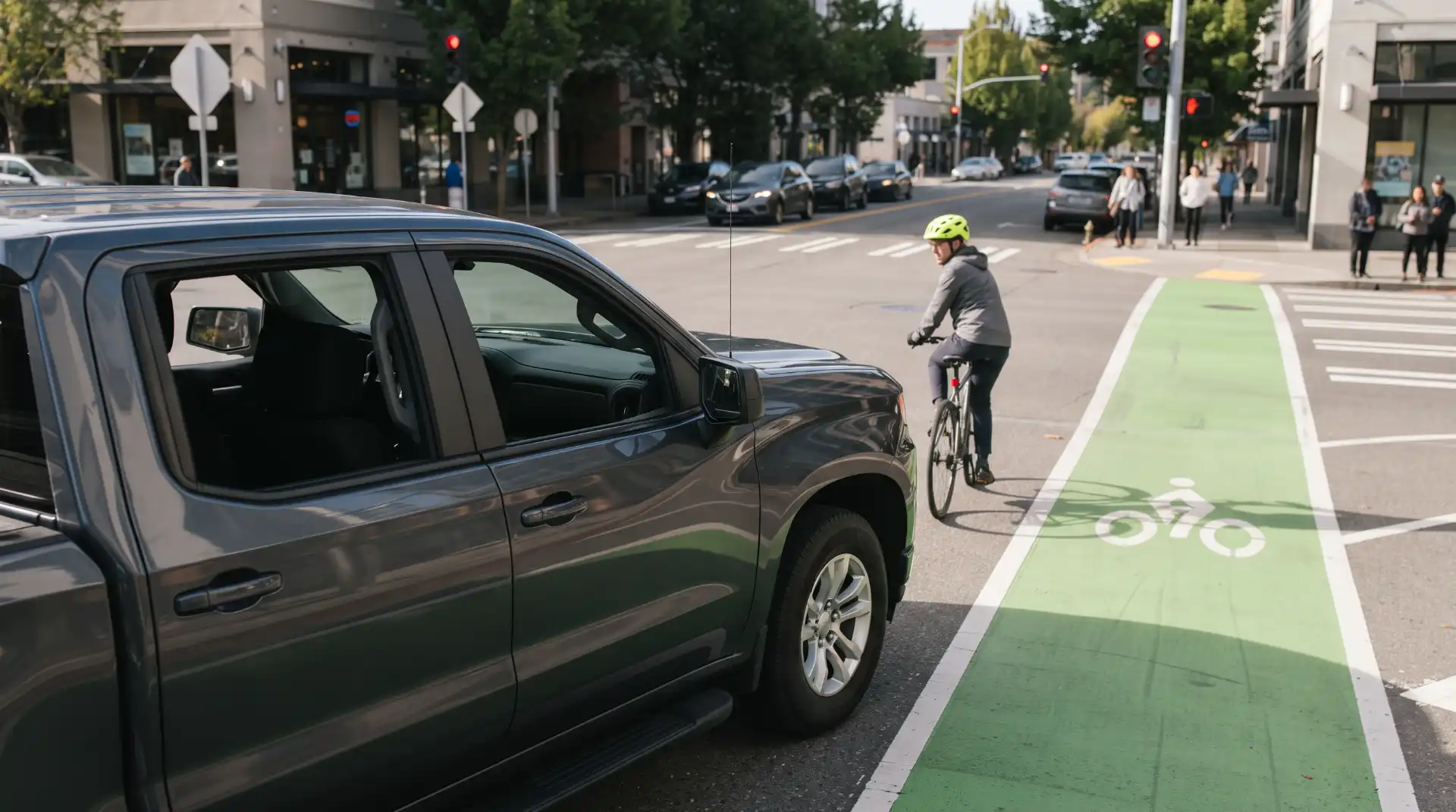
Large SUVs, pickup trucks, buses, and commercial vehicles can create additional challenges for cyclists because of their size and visibility characteristics.
A cyclist may be traveling beside a large vehicle and enter an area that is difficult for the driver to see.
Turning movements can be particularly important.
A vehicle making a right turn may cross the path of a cyclist traveling alongside it. If the driver does not adequately check the surrounding area, a collision can occur.
The size of the vehicle alone does not establish negligence, but visibility and positioning can become important when reconstructing the accident.
For readers interested in this issue, your existing article on large SUVs and pickup trucks provides a useful related resource:
Can Large SUVs and Pickup Trucks Increase Bicycle Crash Severity?
E-Bikes Are Changing Shared-Street Traffic
Electric bicycles have added another dimension to shared-street transportation.
Depending on their design and legal classification, e-bikes can travel at speeds that may differ from conventional bicycles.
That can affect how quickly an e-bike approaches an intersection or catches up with another road user.
E-bike laws also differ between jurisdictions. Rules may address classifications, equipment, speed, age requirements, helmet use, and where certain e-bikes may operate.
When an e-bike is involved in a crash, investigators may therefore need to determine the type of bicycle involved and the rules governing its operation at the time.
Your website’s existing article concerning delivery-app companies and e-bike liability can provide another internal resource for readers interested in e-bike accident claims:
How Delivery App Companies Could Affect E-Bike Liability Cases
What Evidence Can Help Establish Responsibility?
Evidence is one of the most important parts of a bicycle accident investigation.
Photographs can document the physical scene. Video recordings can show the sequence of movements. Witnesses may provide information about traffic signals, speed, positioning, and driver behavior.
The accident report may contain observations from responding officers, while medical records can document injuries and treatment.
Damage to the bicycle and vehicle can also help reconstruct the collision.
For example, damage to the side of a vehicle may be consistent with a turning collision, while damage to the front of a vehicle and rear of a bicycle may indicate a different sequence.
Damage patterns alone do not establish liability, but they can be compared with witness statements and video evidence.
Bicycle and Vehicle Cameras May Provide Critical Information
Cameras have become increasingly common on roads and vehicles.
Dashcams may capture vehicles approaching a bicycle. Bicycle-mounted cameras may record the cyclist’s view of an intersection. Nearby businesses may have security cameras facing sidewalks or parking areas.
Traffic cameras may also provide useful information depending on the location and retention policies.
Because video systems often overwrite old footage, prompt efforts to identify potentially relevant recordings may be important.
A cyclist who believes a nearby business or public camera captured the crash should make a note of the location and approximate time.
The same applies to witnesses who may have recorded the incident on a phone.
Witness Statements Can Clarify What Happened
Witnesses may be able to provide information that cannot be obtained from physical evidence.
A witness might have seen a driver looking down at a phone, observed a bicycle entering an intersection, or noticed that a traffic signal was changing.
Witnesses should be identified as soon as reasonably possible.
Their contact information can allow investigators to obtain statements later.
A witness does not need to know the law to provide useful information. In fact, factual observations are often more useful than conclusions about who was legally responsible.
Medical Documentation Is Important After a Bicycle Crash
Bicycle accidents can cause serious injuries because cyclists have relatively little physical protection compared with occupants of passenger vehicles.
Possible injuries include fractures, road rash, soft-tissue injuries, spinal injuries, internal injuries, and traumatic brain injuries.
Medical evaluation after a significant collision can help identify injuries that may not be immediately obvious.
Medical records also create documentation showing what treatment was required.
Treatment records may include emergency care, diagnostic imaging, surgery, prescriptions, physical therapy, specialist appointments, and follow-up treatment.
NHTSA’s bicycle safety resources provide additional information about bicycle crash risks and prevention:
NHTSA Bicycle Safety Resources
What Should a Cyclist Do Immediately After a Crash?
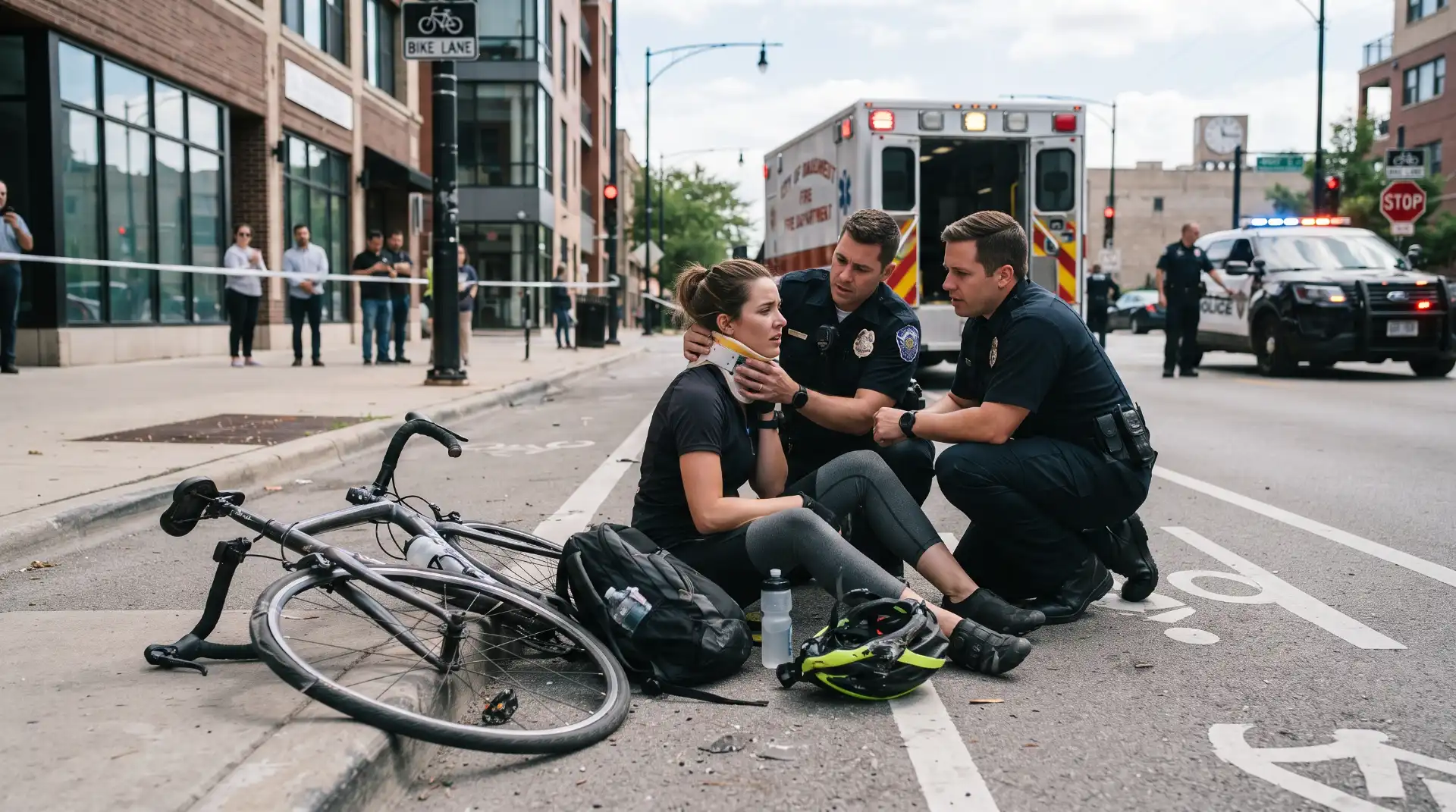
The first priority after any serious collision is safety and medical care.
If emergency treatment is needed, the cyclist should seek medical attention rather than focusing on collecting evidence.
When the situation is safe, documenting the scene may be helpful.
Photographs should ideally capture the overall intersection as well as specific features such as signs, lane markings, pavement defects, parked vehicles, traffic signals, construction barriers, and visibility obstructions.
The cyclist should also obtain the contact information of witnesses when possible.
The bicycle and damaged equipment should be preserved rather than discarded.
Insurance information should be exchanged with the driver, and the accident should be reported when required.
Cyclists should also keep copies of medical bills, repair estimates, receipts, insurance correspondence, and other accident-related records.
Your site’s existing guide to what cyclists should do after an accident provides a more detailed resource:
What to Do After a Bicycle Accident: A Step-by-Step Legal Guide
Should You Speak With the Driver’s Insurance Company?
After a bicycle accident, an insurance company may contact the cyclist to discuss the collision.
An insurer may ask for information about what happened, the cyclist’s injuries, medical treatment, and other circumstances.
Cyclists should remember that an insurance adjuster’s investigation and the injured person’s interests may not be identical.
Statements should be accurate and based on known facts.
A cyclist should avoid guessing about information they do not know. For example, if the cyclist did not see the vehicle immediately before impact, saying so is more accurate than attempting to reconstruct something that was not observed.
For serious injury claims or disputed liability cases, obtaining legal advice before making detailed statements may help the cyclist understand the implications of the communication.
Can More Than One Party Be Responsible?
Yes, depending on the facts and applicable law.
A bicycle crash might involve a motorist, another cyclist, a pedestrian, a property owner, a construction contractor, a vehicle manufacturer, or a public entity.
However, identifying multiple potentially involved parties does not mean that each party is automatically legally liable.
Each potential defendant must be evaluated under the applicable legal standards.
For example, if a cyclist crashes because a construction barrier was improperly placed, the investigation may need to determine who installed the barrier, who controlled the construction site, whether warnings were required, and whether the condition actually contributed to the accident.
Similarly, if a roadway defect is involved, investigators may need to determine which public or private entity had responsibility for that portion of the road.
Government Claims Can Have Special Requirements
Claims involving cities, counties, states, and transportation agencies can involve procedural requirements that do not apply to ordinary claims against private motorists.
Depending on the jurisdiction, an injured person may need to provide a government claim within a specific period before filing a lawsuit.
Government immunity rules may also affect whether a claim can proceed.
These requirements vary significantly throughout the United States.
Therefore, a cyclist who believes a roadway defect or public infrastructure problem contributed to an accident should not assume that the ordinary personal-injury process applies.
Prompt jurisdiction-specific legal advice may be important because missing a required administrative deadline can potentially affect a claim.
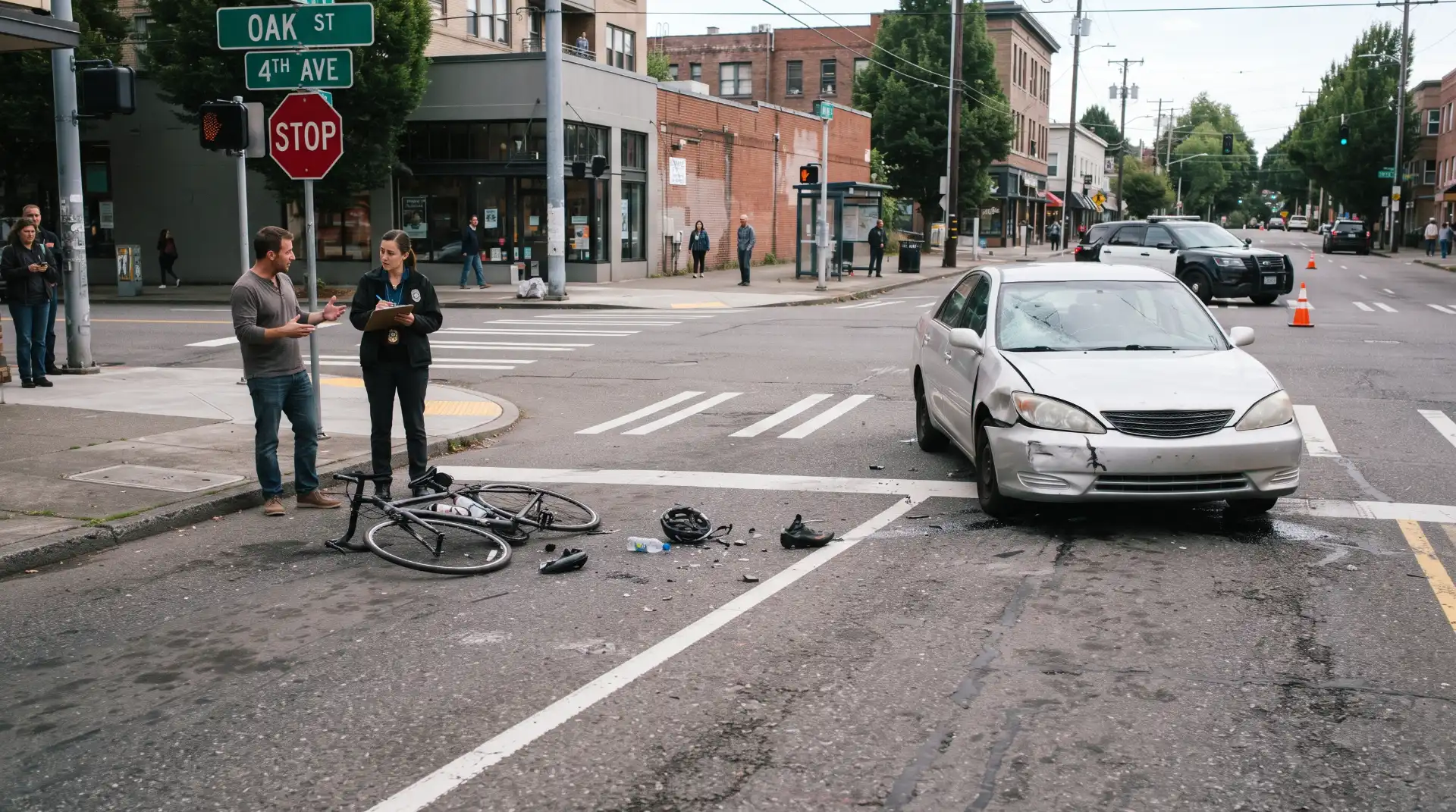
How Insurance Companies May Investigate a Shared-Street Accident
Insurance companies often examine several categories of evidence when evaluating a bicycle accident.
The accident report may be reviewed first. The insurer may then examine photographs, medical records, vehicle damage, bicycle damage, witness statements, traffic laws, and available video.
The location of the accident can also be significant.
An adjuster may use photographs or mapping information to examine the intersection and determine whether the bicycle was traveling in a permitted area.
If liability is disputed, the insurer may argue that the cyclist contributed to the crash.
This does not mean the argument is correct. It means the issue may need to be supported or challenged using evidence.
Why Preserving the Bicycle Can Matter
The bicycle itself can be important evidence.
After a collision, cyclists sometimes want to repair the bicycle immediately because they depend on it for transportation or recreation.
Before making substantial repairs, however, it may be useful to document the bicycle’s condition.
Photographs should capture broken components, scratches, dents, bent wheels, damaged handlebars, damaged pedals, and other visible evidence.
Repair estimates and receipts should also be retained.
In some cases, the bicycle may contain electronic equipment or cameras that provide additional evidence.
What If the Driver Leaves the Scene?
A hit-and-run bicycle accident can create additional challenges.
The cyclist may have little information about the vehicle or driver.
Witnesses, surveillance cameras, traffic cameras, bicycle cameras, and nearby businesses can become especially important.
Even a partial description of a vehicle may help investigators identify it.
Information such as the vehicle’s approximate color, body style, direction of travel, license plate characters, damage, or distinctive features may be useful.
A cyclist should report the incident to law enforcement and preserve any available evidence.
Bicycle Accident Claims Depend on State Law
One of the most important points for readers to understand is that bicycle accident law is not identical throughout the United States.
Negligence standards, comparative-fault rules, statutes of limitation, insurance requirements, bicycle-equipment laws, right-of-way rules, government-claim procedures, and other requirements can vary.
A general article can explain common legal concepts, but it cannot determine whether a specific cyclist has a valid claim.
That determination requires reviewing the accident facts under the law applicable to the location where the crash occurred.
Frequently Asked Questions
Are bicycles legally allowed on shared streets?
In many circumstances, yes. Bicycles commonly share public roadways with motor vehicles. However, restrictions can apply to particular roads or facilities, so cyclists should follow applicable state and local rules.
Does a driver automatically have responsibility when hitting a cyclist?
No. A collision between a vehicle and bicycle does not automatically establish liability. The investigation must determine what each road user was doing and whether anyone violated an applicable law or acted negligently.
Can a cyclist be partly responsible for an accident?
Potentially. Depending on the facts and state law, a cyclist’s conduct may affect a claim through comparative or contributory-fault rules.
Can unclear road markings affect a bicycle accident claim?
They can become relevant evidence if the markings contributed to confusion or the collision. However, unclear markings alone do not automatically establish legal liability.
Can a city be responsible for a dangerous shared street?
Potentially, but government liability involves specific legal requirements that vary by jurisdiction. Evidence may be needed concerning the condition of the roadway, notice, maintenance responsibilities, applicable immunity rules, and whether the condition legally qualifies as dangerous.
What if both the driver and cyclist violated traffic rules?
Both parties’ conduct may be considered. The legal effect depends on the state’s negligence and fault rules.
Is a bicycle accident attorney necessary for every crash?
No. Minor accidents may sometimes be resolved through insurance without litigation. Legal guidance can become more important when injuries are serious, liability is disputed, multiple parties may be involved, or government or roadway-design issues are present.
Final Thoughts on Responsibility for Shared-Street Bicycle Accidents
Bicycle accidents on shared streets can involve complicated questions because bicycles and motor vehicles must navigate the same roadway while dealing with intersections, traffic signals, lane changes, parked vehicles, pedestrians, construction zones, and changing road conditions.
When traffic rules appear unclear, responsibility should not be determined simply by assuming that the driver or cyclist must be at fault.
The investigation should examine the complete sequence of events.
Important questions can include where the cyclist was traveling, where the vehicle was positioned, what traffic controls applied, whether anyone had the right of way, whether a driver was turning or passing, whether the cyclist was changing lanes, whether either person was distracted, and whether road conditions contributed to the collision.
Evidence can make a major difference.
Photographs, traffic-camera footage, dashcam recordings, bicycle-camera footage, witness statements, accident reports, medical records, vehicle damage, bicycle damage, traffic signs, pavement markings, and roadway photographs can all help establish what happened.
In some cases, the evidence may point toward driver negligence. In other cases, a cyclist’s conduct may be relevant. A collision can also involve multiple contributing factors, including roadway design, construction, maintenance, or another party’s actions.
The legal consequences depend heavily on state law.
For cyclists who have suffered serious injuries, disputed liability, significant property damage, or complicated insurance issues, consulting a qualified bicycle accident attorney in the appropriate jurisdiction can help determine what legal options may be available.
Shared streets are intended to accommodate multiple road users. When a collision occurs, the goal of an investigation should be to determine what happened, identify the factors that contributed to the crash, preserve the available evidence, and apply the law that governs the location where the accident occurred.