Electric bicycles (e‑bikes) have revolutionized urban mobility, and delivery app companies like Uber Eats, DoorDash, and Grubhub have made them a common sight in cities across the United States. While these platforms bring convenience to consumers, they also create a complex legal environment when delivery riders cause accidents. Victims often face challenging questions about liability, insurance coverage, and potential recovery. Understanding how delivery app companies can affect e‑bike liability cases is essential for anyone injured in these incidents.
The Rise of Delivery E‑Bikes and Crash Risk
Delivery apps have grown exponentially, especially after the COVID‑19 pandemic, making e‑bike deliveries a cornerstone of urban transportation in cities like New York, Los Angeles, and Chicago. Thousands of riders use e‑bikes to navigate busy streets under strict time pressures and app-generated performance ratings. These conditions increase crash risk because riders may speed, make sudden turns, or take unsafe routes to meet delivery expectations. Collisions involving pedestrians, cyclists, or vehicles require careful legal and insurance analysis, as the responsibility often extends beyond the rider alone. (emaslawgroup.com)
Traditional Liability: Rider and Third Parties
In most personal injury cases, the individual whose negligence caused harm is the first target for liability claims. If a delivery e‑bike rider disobeys traffic rules or rides recklessly, they are personally responsible for damages. However, riders often lack sufficient insurance or assets to cover serious injuries, particularly in severe crashes. This limitation makes it crucial to consider additional sources of recovery, including the delivery app company’s potential responsibility.
Independent Contractor Classification and Legal Implications
A major legal challenge is that delivery platforms often classify riders as independent contractors rather than employees. This classification reduces corporate liability under respondeat superior, which typically holds employers responsible for employees’ actions performed within the scope of employment. Companies argue that riders control their schedules, provide their own bikes, and accept or decline jobs voluntarily. However, courts sometimes consider the level of control exerted through app algorithms, strict delivery deadlines, and performance expectations when determining potential company liability.
Delivery App Insurance and Coverage Gaps
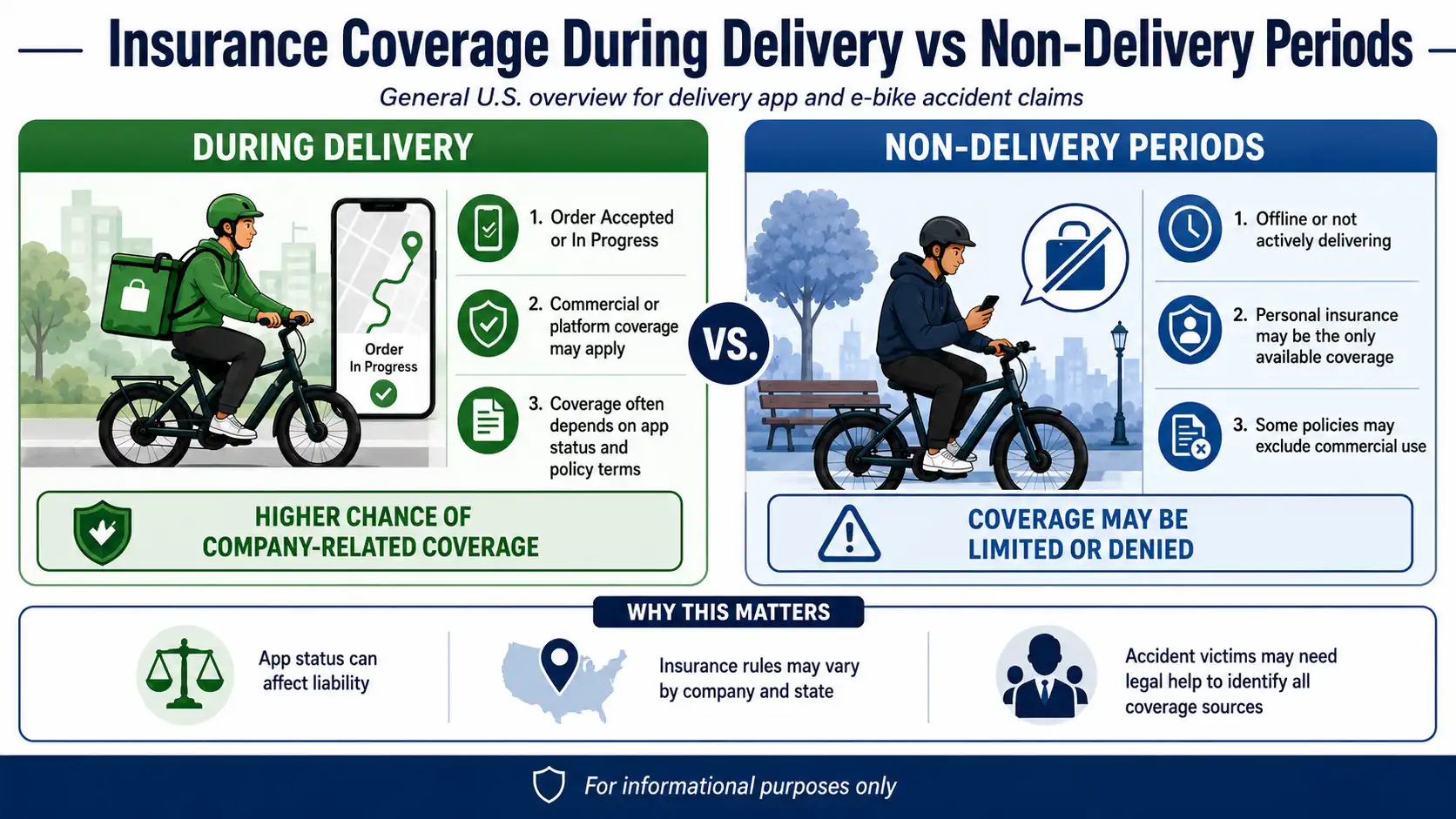
Insurance coverage for delivery e‑bike crashes is often complex and inconsistent. Many platforms provide commercial liability insurance while the rider is actively making a delivery. Coverage levels may reach up to $1 million in some cases. Outside active delivery periods, coverage may be limited or nonexistent, and personal insurance policies often exclude commercial activity. These gaps mean that determining who pays for injuries frequently depends on the rider’s app status at the time of the crash, making legal guidance essential.
Delivery Company Liability Beyond the Rider
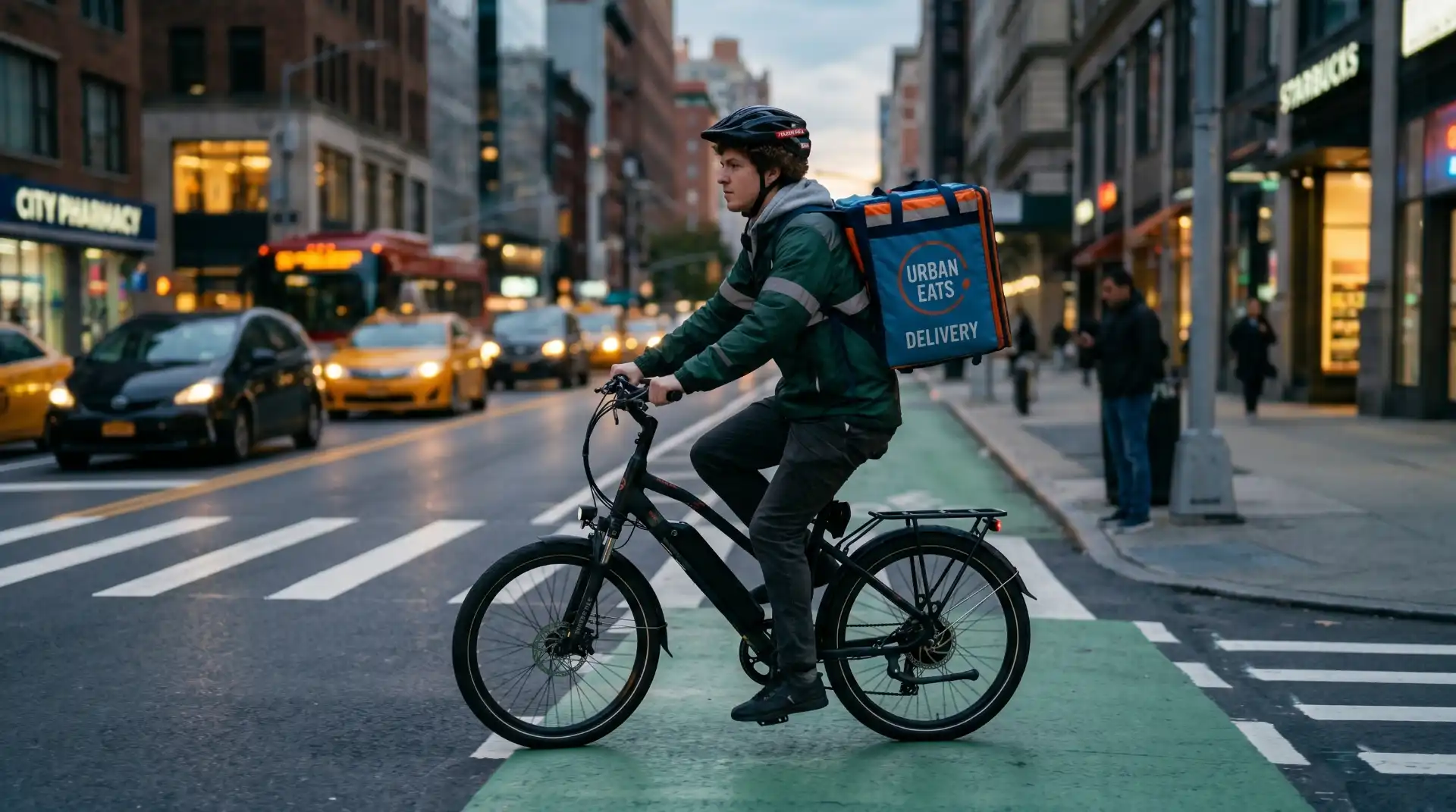
Even with independent contractor classifications, delivery platforms can sometimes face direct liability. Courts may consider negligent hiring if the company fails to screen riders for traffic offenses, negligent supervision if they encourage unsafe behaviors through unrealistic deadlines, or negligent system design if app algorithms prioritize speed over safety. These claims require detailed investigation of company policies, app data, and internal procedures to establish how the platform contributed to the crash.
E‑Bikes Present Unique Challenges
E‑bikes introduce additional complexities. Some states classify them as bicycles, but insurance definitions may differ, leading to disputes. Many riders lack adequate commercial or personal insurance coverage for high-speed e‑bike operation. Furthermore, the lack of license plates or registration on most e‑bikes makes identification difficult, especially in hit-and-run scenarios. These factors intersect with delivery app liability issues, making each case highly fact-specific.
Steps After a Delivery E‑Bike Crash
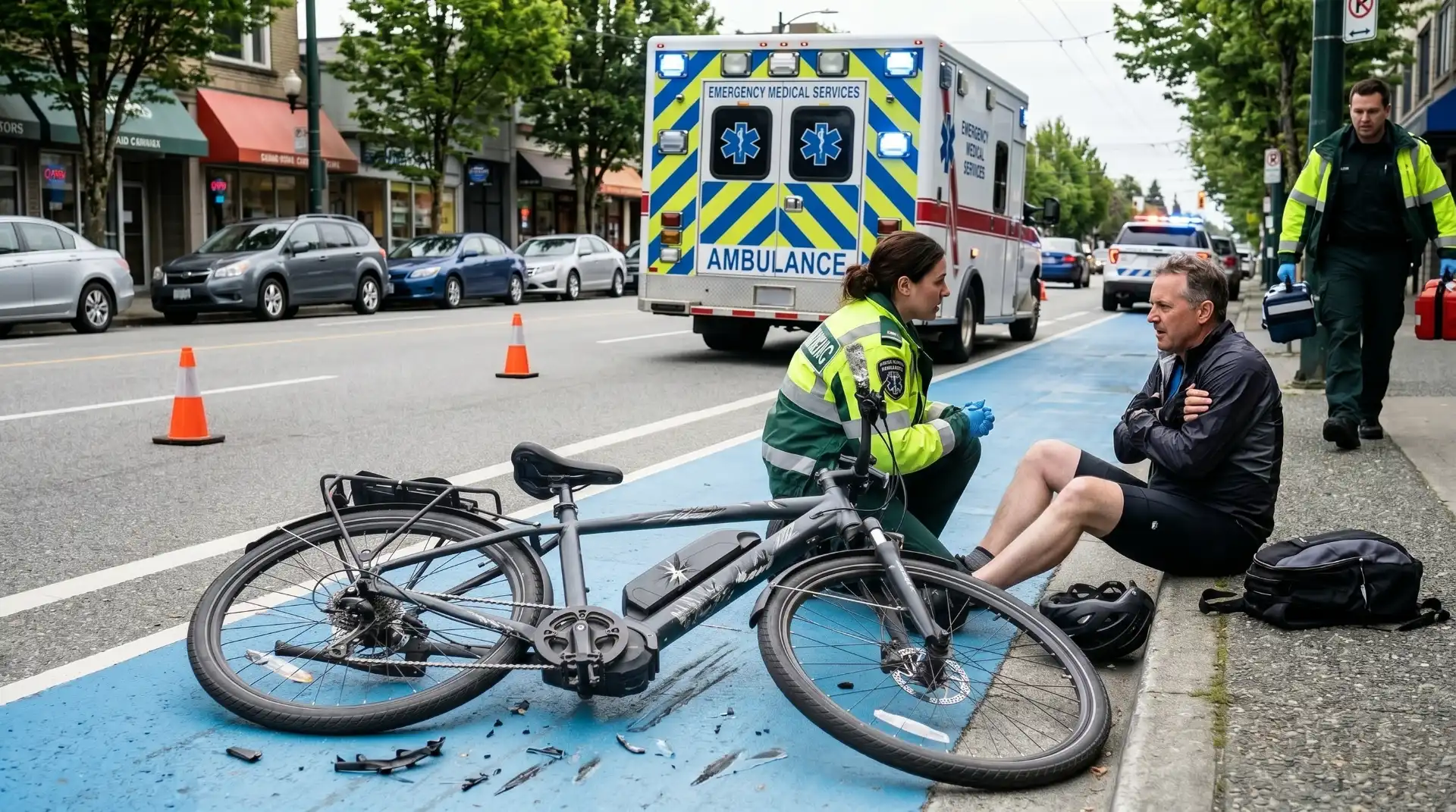
Victims should take immediate action to protect their legal rights. Calling emergency services and obtaining medical care is the first priority. Gathering rider identification, delivery app information, and documenting the scene with photos and timestamps are critical. Preserving app data can be essential, as insurance coverage may depend on whether the rider was actively engaged in a delivery at the time of the accident. Consulting an experienced attorney early ensures that all potential claims are identified and pursued.
Legal Strategies for Recovery
Attorneys typically explore multiple avenues for compensation. Claims can be filed directly against the rider for negligence, through the platform’s commercial insurance, or even against the company itself for negligent hiring or supervision. In complex situations, third-party liability claims may also be possible. Evidence from app logs, GPS data, and witness accounts often proves critical in establishing fault and ensuring victims can recover damages for medical bills, lost income, and pain and suffering.
The Future of Delivery E‑Bike Liability
As e‑bike usage and delivery app reliance continue to grow, courts and regulators are increasingly evaluating how liability should be determined. Some jurisdictions are considering mandatory insurance, registration, and licensing for e‑bikes used commercially. These developments could shift responsibility more clearly toward platforms in the future, emphasizing the importance of staying informed about evolving laws and regulations.
Conclusion
Delivery app companies have changed the landscape of urban mobility, introducing both convenience and legal complexity. Victims injured by delivery e‑bike riders face unique hurdles, from insurance gaps to independent contractor classifications. By understanding how these companies affect liability and taking timely legal action, injured parties can pursue fair recovery. Anyone involved in a delivery e‑bike crash should consult a knowledgeable bicycle accident attorney to explore all potential avenues for compensation.
For authoritative information on e‑bike laws and safety, see Nolo’s guide on Electric Bike Laws and Accidents.